






Diese Website verwendet Cookies und ähnliche Technologien. Dabei handelt es sich um kleine Textdateien, die auf eurem Computer gespeichert und ausgelesen werden. Indem ihr auf "Alles akzeptieren" klickt, stimmt ihr der Verarbeitung von Daten, der Erstellung und Verarbeitung von individuellen Nutzungsprofilen über Websites und über Partner und Geräte hinweg sowie der Übermittlung eurer Daten an Drittanbieter zu, die eure Daten teilweise in Ländern außerhalb der Europäischen Union verarbeiten (GDPR Art. 49). Einzelheiten hierzu findet ihr in den Datenschutzhinweisen. Die Daten werden für Analysen und für eigene Zwecke Dritter verwendet. Weitere Informationen, auch über die Datenverarbeitung durch Drittanbieter und die Möglichkeit des Widerrufs, findet ihr in den Einstellungen und in unseren Datenschutzhinweisen. Hier könnt ihr mit den notwendigen Tools fortfahren.
- Verlag: Taylor & Francis
- Autor: Anna Islentyeva
- Artikel-Nr.: KNV96364483
- ISBN: 9780367607999
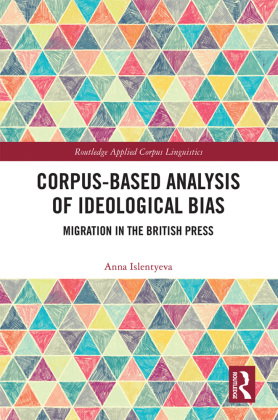
Corpus-Based Analysis of Ideological Bias presents research combining a range of corpus-linguistic techniques which are employed to analyse how migration discourse is (re)constructed in the contemporary British press. Two specialised corpora containing 1,000 news reports, editorials, and opinion pieces from five major national British newspapers were collected and annotated for this research. The event separating these two corpora is the 2016 referendum on Britain's membership of the European Union (EU). In its analysis, this book:
- employs both quantitative and qualitative analytical methods, with four case studies offering a broad perspective on how the topical socio-political issues of migration and asylum seeking are represented by left- and right-wing British newspapers;
- explores how newspapers reveal their political orientation and promote their political agenda by employing specific linguistic patterns and discursive strategies - in this case, in the representation of the key social actors within migration discourse;
- provides case studies that place a particular focus on the discourses surrounding European migrants and migration within the EU, which proved to be a very popular topic in the British press both before and after the 2016 EU membership referendum; and
- offers a comparative corpus analysis that seeks to ascertain whether media discourse regarding EU migration has changed in the wake of the referendum.
This book is a useful source not only for students of English, linguistics, and media studies, but also for researchers in the fields of applied corpus linguistics, critical discourse studies, contemporary media analysis, and metaphor research.