






Diese Website verwendet Cookies und ähnliche Technologien. Dabei handelt es sich um kleine Textdateien, die auf eurem Computer gespeichert und ausgelesen werden. Indem ihr auf "Alles akzeptieren" klickt, stimmt ihr der Verarbeitung von Daten, der Erstellung und Verarbeitung von individuellen Nutzungsprofilen über Websites und über Partner und Geräte hinweg sowie der Übermittlung eurer Daten an Drittanbieter zu, die eure Daten teilweise in Ländern außerhalb der Europäischen Union verarbeiten (GDPR Art. 49). Einzelheiten hierzu findet ihr in den Datenschutzhinweisen. Die Daten werden für Analysen und für eigene Zwecke Dritter verwendet. Weitere Informationen, auch über die Datenverarbeitung durch Drittanbieter und die Möglichkeit des Widerrufs, findet ihr in den Einstellungen und in unseren Datenschutzhinweisen. Hier könnt ihr mit den notwendigen Tools fortfahren.
- Verlag: Taylor & Francis
- Autor: Deborah Mutnick
- Artikel-Nr.: KNV96360866
- ISBN: 9781032108650
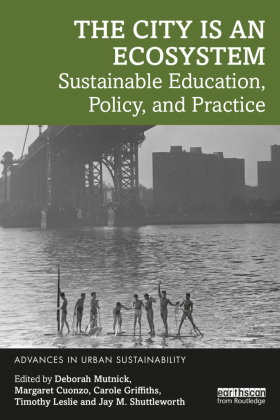
The City is an Ecosystem maps an interdisciplinary, community-engaged response to the great ecological crises of our time-climate change, biodiversity loss, and social inequality-which pose particular challenges for cities, where more than half the world's population currently live.
Across more than twenty chapters, the three parts of the book cover historical and scientific perspectives on the city as an ecosystem; human rights to the city in relation to urban sustainability; and the city as a sustainability classroom at all educational levels inside and outside formal classroom spaces. It argues that such efforts must be interdisciplinary and widespread to ensure an informed public and educated new generation are equipped to face an uncertain future, particularly relevant in the post-COVID-19 world.
Gathering multiple interdisciplinary and community-engaged perspectives on these environmental crises, with contemporary and historical case study discussions, this timely volume cuts across the humanities and social and health sciences, and will be of interest to policymakers, urban ecologists, activists, built environment professionals, educators, and advanced students concerned with the future of our cities.