






Diese Website verwendet Cookies und ähnliche Technologien. Dabei handelt es sich um kleine Textdateien, die auf eurem Computer gespeichert und ausgelesen werden. Indem ihr auf "Alles akzeptieren" klickt, stimmt ihr der Verarbeitung von Daten, der Erstellung und Verarbeitung von individuellen Nutzungsprofilen über Websites und über Partner und Geräte hinweg sowie der Übermittlung eurer Daten an Drittanbieter zu, die eure Daten teilweise in Ländern außerhalb der Europäischen Union verarbeiten (GDPR Art. 49). Einzelheiten hierzu findet ihr in den Datenschutzhinweisen. Die Daten werden für Analysen und für eigene Zwecke Dritter verwendet. Weitere Informationen, auch über die Datenverarbeitung durch Drittanbieter und die Möglichkeit des Widerrufs, findet ihr in den Einstellungen und in unseren Datenschutzhinweisen. Hier könnt ihr mit den notwendigen Tools fortfahren.
- Verlag: Taylor & Francis
- Autor: Shein-Chung Chow
- Artikel-Nr.: KNV96364546
- ISBN: 9780367502904
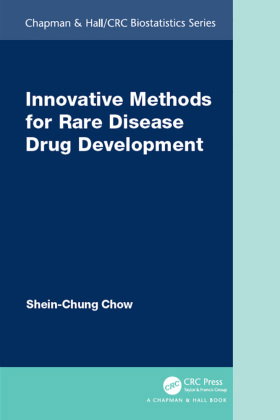
In the United States, a rare disease is defined by the Orphan Drug Act as a disorder or condition that affects fewer than 200,000 persons. For the approval of "orphan" drug products for rare diseases, the traditional approach of power analysis for sample size calculation is not feasible because there are only limited number of subjects available for clinical trials. In this case, innovative approaches are needed for providing substantial evidence meeting the same standards for statistical assurance as drugs used to treat common conditions. Innovative Methods for Rare Disease Drug Development focuses on biostatistical applications in terms of design and analysis in pharmaceutical research and development from both regulatory and scientific (statistical) perspectives.
Key Features:
- Reviews critical issues (e.g., endpoint/margin selection, sample size requirements, and complex innovative design).
- Provides better understanding of statistical concepts and methods which may be used in regulatory review and approval.
- Clarifies controversial statistical issues in regulatory review and approval accurately and reliably.
- Makes recommendations to evaluate rare diseases regulatory submissions.
- Proposes innovative study designs and statistical methods for rare diseases drug development, including n-of-1 trial design, adaptive trial design, and master protocols like platform trials.
- Provides insight regarding current regulatory guidance on rare diseases drug development like gene therapy.