






Diese Website verwendet Cookies und ähnliche Technologien. Dabei handelt es sich um kleine Textdateien, die auf eurem Computer gespeichert und ausgelesen werden. Indem ihr auf "Alles akzeptieren" klickt, stimmt ihr der Verarbeitung von Daten, der Erstellung und Verarbeitung von individuellen Nutzungsprofilen über Websites und über Partner und Geräte hinweg sowie der Übermittlung eurer Daten an Drittanbieter zu, die eure Daten teilweise in Ländern außerhalb der Europäischen Union verarbeiten (GDPR Art. 49). Einzelheiten hierzu findet ihr in den Datenschutzhinweisen. Die Daten werden für Analysen und für eigene Zwecke Dritter verwendet. Weitere Informationen, auch über die Datenverarbeitung durch Drittanbieter und die Möglichkeit des Widerrufs, findet ihr in den Einstellungen und in unseren Datenschutzhinweisen. Hier könnt ihr mit den notwendigen Tools fortfahren.
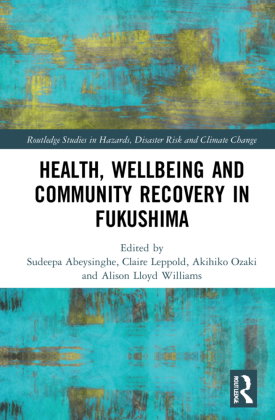
- Verlag: Taylor & Francis
- Autor: Sudeepa Abeysinghe
- Artikel-Nr.: KNV96364535
- ISBN: 9781032022734
This book examines the issue of disaster recovery in relation to community wellbeing and resilience, exploring the social, political, demographic and environmental changes in the wake of the 2011 Fukushima disaster.
The contributors reflect on the Fukushima disaster of earthquake, tsunami and radiation contamination and its impacts on society from an interdisciplinary perspective of the social sciences, critical public health, and the humanities. It focuses on four aspects, which form the sections of the work:
- Living with Risk and Uncertainty
- Vulnerability and Inequality
- Community Action, Engagement and Wellbeing
- Notes from the Field
The first three sections present research on the long-term consequences of the disaster on community health and wellbeing. These findings are enhanced and developed in the 'Notes from the Field' section where local practitioners from medicine and community recovery reflect on their experiences in relation to concepts developed in the previous sections.
This work significantly extends the literature on long-term wellbeing following disaster. The case study of Fukushima is a multi-faceted process that illuminates wider issues around post-disaster regeneration in Fukushima. This problem takes on new importance in the context of Covid-19, including direct parallels in the issues of risk measurement, social inequality, and wider wellbeing impacts, which public health disciplines can draw from.