






Diese Website verwendet Cookies und ähnliche Technologien. Dabei handelt es sich um kleine Textdateien, die auf eurem Computer gespeichert und ausgelesen werden. Indem ihr auf "Alles akzeptieren" klickt, stimmt ihr der Verarbeitung von Daten, der Erstellung und Verarbeitung von individuellen Nutzungsprofilen über Websites und über Partner und Geräte hinweg sowie der Übermittlung eurer Daten an Drittanbieter zu, die eure Daten teilweise in Ländern außerhalb der Europäischen Union verarbeiten (GDPR Art. 49). Einzelheiten hierzu findet ihr in den Datenschutzhinweisen. Die Daten werden für Analysen und für eigene Zwecke Dritter verwendet. Weitere Informationen, auch über die Datenverarbeitung durch Drittanbieter und die Möglichkeit des Widerrufs, findet ihr in den Einstellungen und in unseren Datenschutzhinweisen. Hier könnt ihr mit den notwendigen Tools fortfahren.
- Verlag: Taylor & Francis
- Autor: Verne Harris
- Artikel-Nr.: KNV96364527
- ISBN: 9780367681142
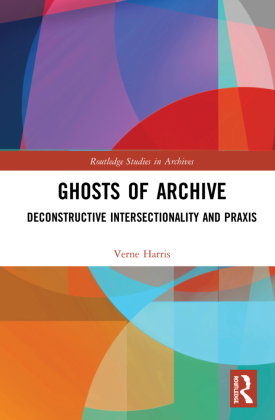
Ghosts of Archive draws on the discourses of deconstruction, intersectionality and archetypal psychology to mount an argument that archive is fundamentally and structurally spectral and that the work of archive is justice.
Drawing on more than 20 years of the author's research on deconstruction and archive, the book posits archive as an essential resource for social justice activism and as a source, or location, of soul for individuals and communities. Through explorations of what Jacques Derrida termed 'hauntology', Harris invites a listening to the call for justice in conceptual spaces that are non-disciplinary. He argues that archive is both constructed in relation to and beset by ghosts - ghosts of the living, of the dead and of those not yet born - and that attention should be paid to them. Establishing a unique nexus between a deconstructive intersectionality and traditions of 'memory for justice' in struggles against oppression from South Africa and elsewhere, the book makes a case for a deconstructive praxis in today's archive.
Offering new ideas about spectrality, banditry and archival activism, Ghosts of Archive should appeal to those working in the disciplines of archival science, information studies and psychology. It should also be essential reading for those with an interest in social justice issues, transitional justice, history, philosophy, memory studies and postcolonial studies.