






Diese Website verwendet Cookies und ähnliche Technologien. Dabei handelt es sich um kleine Textdateien, die auf eurem Computer gespeichert und ausgelesen werden. Indem ihr auf "Alles akzeptieren" klickt, stimmt ihr der Verarbeitung von Daten, der Erstellung und Verarbeitung von individuellen Nutzungsprofilen über Websites und über Partner und Geräte hinweg sowie der Übermittlung eurer Daten an Drittanbieter zu, die eure Daten teilweise in Ländern außerhalb der Europäischen Union verarbeiten (GDPR Art. 49). Einzelheiten hierzu findet ihr in den Datenschutzhinweisen. Die Daten werden für Analysen und für eigene Zwecke Dritter verwendet. Weitere Informationen, auch über die Datenverarbeitung durch Drittanbieter und die Möglichkeit des Widerrufs, findet ihr in den Einstellungen und in unseren Datenschutzhinweisen. Hier könnt ihr mit den notwendigen Tools fortfahren.
- Verlag: Taylor & Francis
- Autor: Mattia Cipriani
- Artikel-Nr.: KNV96364521
- ISBN: 9780367557034
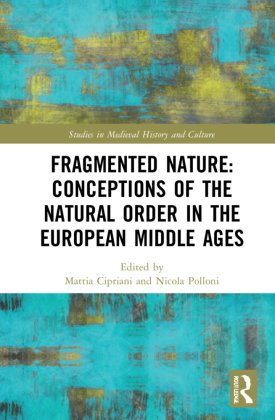
The Latin Middle Ages were characterised by a vast array of different representations of nature. These conceptualisations of the natural world were developed according to the specific requirements of many different disciplines, with the consequent result of producing a fragmentation of images of nature. Despite this plurality, two main tendencies emerged. On the one hand, the natural world was seen as a reflection of God's perfection, teleologically ordered and structurally harmonious. On the other, it was also considered as a degraded version of the spiritual realm - a world of impeccable ideas, separate substances, and celestial movers.
This book focuses on this tension between order and randomness, and idealisation and reality of nature in the Middle Ages. It provides a cutting-edge profile of the doctrinal and semantic richness of the medieval idea of nature, and also illustrates the structural interconnection among learned and scientific disciplines in the medieval period, stressing the fundamental bond linking together science and philosophy, on the one hand, and philosophy and theology, on the other.
This book will appeal to scholars and students alike interested in Medieval European History, Theology, Philosophy, and Science.