






Diese Website verwendet Cookies und ähnliche Technologien. Dabei handelt es sich um kleine Textdateien, die auf eurem Computer gespeichert und ausgelesen werden. Indem ihr auf "Alles akzeptieren" klickt, stimmt ihr der Verarbeitung von Daten, der Erstellung und Verarbeitung von individuellen Nutzungsprofilen über Websites und über Partner und Geräte hinweg sowie der Übermittlung eurer Daten an Drittanbieter zu, die eure Daten teilweise in Ländern außerhalb der Europäischen Union verarbeiten (GDPR Art. 49). Einzelheiten hierzu findet ihr in den Datenschutzhinweisen. Die Daten werden für Analysen und für eigene Zwecke Dritter verwendet. Weitere Informationen, auch über die Datenverarbeitung durch Drittanbieter und die Möglichkeit des Widerrufs, findet ihr in den Einstellungen und in unseren Datenschutzhinweisen. Hier könnt ihr mit den notwendigen Tools fortfahren.
- Verlag: Taylor & Francis
- Autor: Katie Cross
- Artikel-Nr.: KNV96364515
- ISBN: 9780367535650
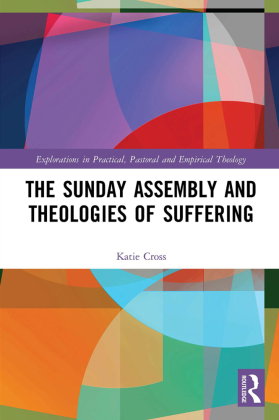
This book draws on a study of the Sunday Assembly- a "godless congregation"- to reflect on how the Church might better deal with suffering, lament and theodicy. Against a backdrop of a shifting attitudes towards religion, humans are now better connected than ever before. It is no exaggeration to suggest that we carry the suffering of the world in our pockets. In the midst of these intersecting issues, the Sunday Assembly provides insight into how meaning-making in times of trauma and crisis is changing.
Drawing on practical theology and using ethnographic tools of investigation, this book includes findings from interviews and observation with the Sunday Assembly in London and Edinburgh. It explores the Sunday Assembly's philosophy of "celebrating life," and what this means in practice. At times, this emphasis on celebration can result in situations where suffering is "passed over," or only briefly acknowledged. In response, this book considers a similar tendency within white Protestant churches to avoid explicit discussion of difficult issues.
This book challenges churches to consider how they might resist the avoidance of suffering through the practice of lament.The insights provided by this book will be of particular interest to scholars of Religious Studies, Practical Theology, Secularism and Atheism/Non-religion.