






Diese Website verwendet Cookies und ähnliche Technologien. Dabei handelt es sich um kleine Textdateien, die auf eurem Computer gespeichert und ausgelesen werden. Indem ihr auf "Alles akzeptieren" klickt, stimmt ihr der Verarbeitung von Daten, der Erstellung und Verarbeitung von individuellen Nutzungsprofilen über Websites und über Partner und Geräte hinweg sowie der Übermittlung eurer Daten an Drittanbieter zu, die eure Daten teilweise in Ländern außerhalb der Europäischen Union verarbeiten (GDPR Art. 49). Einzelheiten hierzu findet ihr in den Datenschutzhinweisen. Die Daten werden für Analysen und für eigene Zwecke Dritter verwendet. Weitere Informationen, auch über die Datenverarbeitung durch Drittanbieter und die Möglichkeit des Widerrufs, findet ihr in den Einstellungen und in unseren Datenschutzhinweisen. Hier könnt ihr mit den notwendigen Tools fortfahren.
- Verlag: Taylor & Francis
- Autor: Redie Bereketeab
- Artikel-Nr.: KNV96364517
- ISBN: 9780367558963
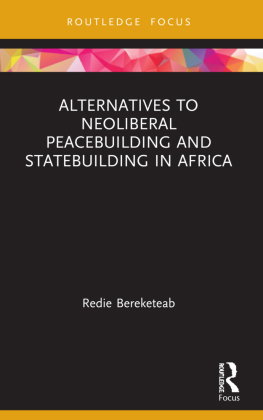
This book critically interrogates the neoliberal peacebuilding and statebuilding model and proposes a popular progressive model centred around the lived realities of African societies.
The neoliberal interventionist model assumed prominence and universal hegemony following the demise of state socialism at the end of the Cold War. However, this book argues that it is a primarily short-term, top-down approach that imposes Western norms and values on conflict and post-conflict societies. By contrast, the popular progressive model espoused by this book is based on stringent examination and analysis of the reality of the socio-economic development, structures, institutions, politics and cultures of developing societies. In doing so, it combines bottom-up and top-down, popular and elite, and long-term evolutionary processes of societal construction as a requisite for enduring peacebuilding and statebuilding.
By comparing and contrasting the dominant neoliberal peacebuilding and statebuilding model with a popular progressive model, the book seeks to empower locals (both elites and masses) to sit in the driver's seat and construct their own societies. As such, it is an important contribution to scholars, activists, policymakers, civil society organisations, NGOs and all those who are concerned with peace, stability and development across Africa and other developing countries.