






Diese Website verwendet Cookies und ähnliche Technologien. Dabei handelt es sich um kleine Textdateien, die auf eurem Computer gespeichert und ausgelesen werden. Indem ihr auf "Alles akzeptieren" klickt, stimmt ihr der Verarbeitung von Daten, der Erstellung und Verarbeitung von individuellen Nutzungsprofilen über Websites und über Partner und Geräte hinweg sowie der Übermittlung eurer Daten an Drittanbieter zu, die eure Daten teilweise in Ländern außerhalb der Europäischen Union verarbeiten (GDPR Art. 49). Einzelheiten hierzu findet ihr in den Datenschutzhinweisen. Die Daten werden für Analysen und für eigene Zwecke Dritter verwendet. Weitere Informationen, auch über die Datenverarbeitung durch Drittanbieter und die Möglichkeit des Widerrufs, findet ihr in den Einstellungen und in unseren Datenschutzhinweisen. Hier könnt ihr mit den notwendigen Tools fortfahren.
- Verlag: Taylor & Francis
- Autor: Elizabeth Mackinlay
- Artikel-Nr.: KNV96360909
- ISBN: 9780367479770
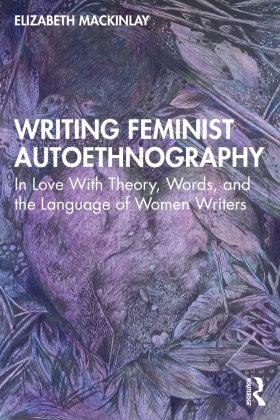
Writing Feminist Autoethnography explores the personal-is-political relationship between autoethnography and feminist theory and practice.
Each chapter introduces the lives and works of a range of feminist thinkers and writers and considers the ways in which their thinking and writing might come to be in relation with our own personal-is-political thinking and writing work as feminist autoethnographers. The book begins with an acknowledgement of the author's positionality as a white-settler-colonial-woman in relation with Yanyuwa, Garrwa, Mara and Kudanji Aboriginal women. This positionality has continued to resonate deeply with the responses and sensibilities the author holds as a feminist autoethnographer to move beyond coloniality. She explores the writing of Virginia Woolf, Simone Weil, Simone de Beauvoir, Hélène Cixous, Kathleen Stewart, bell hooks and Ruth Behar, with critical affect to embrace, embody and engage with feminist thinking, wondering and feeling. The book creatively and performatively explores what it means to live a feminist life as an autoethnographer.
This book will define and conceptualize feminist autoethnography for all qualitative researchers, especially those interested in critical autoethnography, and scholars in gender studies and communication.