






Diese Website verwendet Cookies und ähnliche Technologien. Dabei handelt es sich um kleine Textdateien, die auf eurem Computer gespeichert und ausgelesen werden. Indem ihr auf "Alles akzeptieren" klickt, stimmt ihr der Verarbeitung von Daten, der Erstellung und Verarbeitung von individuellen Nutzungsprofilen über Websites und über Partner und Geräte hinweg sowie der Übermittlung eurer Daten an Drittanbieter zu, die eure Daten teilweise in Ländern außerhalb der Europäischen Union verarbeiten (GDPR Art. 49). Einzelheiten hierzu findet ihr in den Datenschutzhinweisen. Die Daten werden für Analysen und für eigene Zwecke Dritter verwendet. Weitere Informationen, auch über die Datenverarbeitung durch Drittanbieter und die Möglichkeit des Widerrufs, findet ihr in den Einstellungen und in unseren Datenschutzhinweisen. Hier könnt ihr mit den notwendigen Tools fortfahren.
- Verlag: Taylor & Francis
- Autor: Melissa McCracken
- Artikel-Nr.: KNV96360546
- ISBN: 9780367647803
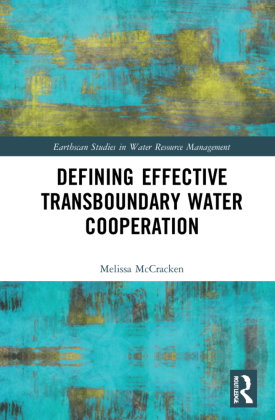
This book establishes a framework for defining transboundary water cooperation and a methodology for evaluating its effectiveness, which will contribute to more effective and therefore successful cooperation processes.
With the increasing focus on transboundary cooperation as a part of the Sustainable Development Goal Framework, there is global recognition of transboundary water cooperation as a tool for improved governance and management of transboundary surface and groundwaters. However, there is not an agreed upon definition of transboundary water cooperation in the literature or in practice. This book develops the Four Frames of Transboundary Water Cooperation, which is a neutral modular framework for developing context-specific explanatory definitions of transboundary water cooperation in basins and aquifers. The Four Frames of Cooperation are legal, institutional, relational, and outcome. However, we need to move beyond defining cooperation to understand better measures of the quality and effectiveness of cooperative processes. The Weighted Model of Effective Cooperation presents a first step in qualitatively evaluating the effectiveness of transboundary water cooperation. This model defines effective transboundary water cooperation and operationalizes a method to evaluate the effectiveness of cooperative processes over internationally shared waters. Effective cooperation emphasizes the relational and outcome frames of cooperation while working towards equitability and sustainability. Together, the Four Frames of Cooperation and the Weighted Model of Effective Cooperation will improve the understanding of cooperation and encourage a detailed evaluation of the quality, success, and effectiveness of cooperative processes.
This book will be of great interest to students and scholars of water resource management, water governance, and environmental politics. It will also appeal to policymakers and professionals working in the fields of water conflict, water diplomacy, and international cooperation.