






Diese Website verwendet Cookies und ähnliche Technologien. Dabei handelt es sich um kleine Textdateien, die auf eurem Computer gespeichert und ausgelesen werden. Indem ihr auf "Alles akzeptieren" klickt, stimmt ihr der Verarbeitung von Daten, der Erstellung und Verarbeitung von individuellen Nutzungsprofilen über Websites und über Partner und Geräte hinweg sowie der Übermittlung eurer Daten an Drittanbieter zu, die eure Daten teilweise in Ländern außerhalb der Europäischen Union verarbeiten (GDPR Art. 49). Einzelheiten hierzu findet ihr in den Datenschutzhinweisen. Die Daten werden für Analysen und für eigene Zwecke Dritter verwendet. Weitere Informationen, auch über die Datenverarbeitung durch Drittanbieter und die Möglichkeit des Widerrufs, findet ihr in den Einstellungen und in unseren Datenschutzhinweisen. Hier könnt ihr mit den notwendigen Tools fortfahren.
- Verlag: Taylor & Francis
- Autor: Christian Aspalter
- Artikel-Nr.: KNV96364270
- ISBN: 9780367644246
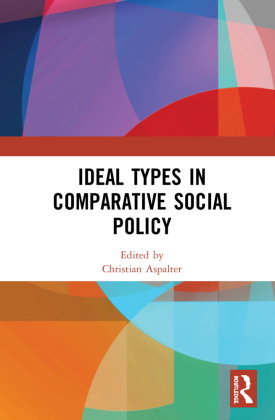
This book introduces readers to the world of ideal types within the readings of Max Weber by giving a theoretical understanding of ideal types, as well as applying the development of ideal types to an array of social policy arenas.
The 21st century has seen the development of welfare regime analysis marked by two differing strands: real-typical welfare regime analyses and ideal-typical welfare regime analysis; the latter focusing on the formation, development, and application of ideal types in general comparative social policy. Designed to provide new theoretical and practical frameworks, as well as updated in-depth developments of ideal-typical welfare regime theory, this book shows how Weber's method of setting up and checking against 'ideal types' can be used in a wide variety of policy areas, such as welfare state system comparison, comparative social and economic development, health policy, mental health policy, health care system analysis, gender policy, employment policy, education policy, and so forth.
The book will be of interest to all scholars and students working in the fields of social policy, including health policy, public policy, political economy, sociology, social work, gender studies, social anthropology, and many more.