






Diese Website verwendet Cookies und ähnliche Technologien. Dabei handelt es sich um kleine Textdateien, die auf eurem Computer gespeichert und ausgelesen werden. Indem ihr auf "Alles akzeptieren" klickt, stimmt ihr der Verarbeitung von Daten, der Erstellung und Verarbeitung von individuellen Nutzungsprofilen über Websites und über Partner und Geräte hinweg sowie der Übermittlung eurer Daten an Drittanbieter zu, die eure Daten teilweise in Ländern außerhalb der Europäischen Union verarbeiten (GDPR Art. 49). Einzelheiten hierzu findet ihr in den Datenschutzhinweisen. Die Daten werden für Analysen und für eigene Zwecke Dritter verwendet. Weitere Informationen, auch über die Datenverarbeitung durch Drittanbieter und die Möglichkeit des Widerrufs, findet ihr in den Einstellungen und in unseren Datenschutzhinweisen. Hier könnt ihr mit den notwendigen Tools fortfahren.
- Verlag: Taylor & Francis
- Autor: Ufuk Topkara
- Artikel-Nr.: KNV96360521
- ISBN: 9781138580442
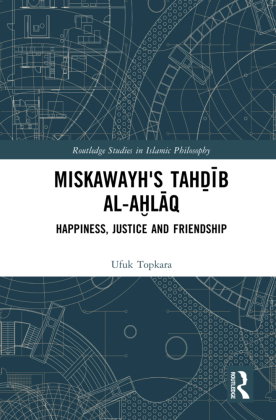
This book engages with the work of Miskawayh, a formative Islamic Philosopher in the 11th century, who is acknowledged as the founder of Islamic Moral Philosophy.
Miskawayh's The Refinement of Character (Tah ib al-A laq) draws from both ancient Greek philosophical tradition and Islamic thought, highlighting the concepts he integrated into what he argued to be the moral core of Islam. This book pursues a comparative study by analyzing and outlining the inherent philosophical concerns of the Aristotelian concepts of Happiness, Justice and Friendship, which are then brought into conversation with Miskawayh's own concepualizations of them. While Tah ib al-A laq is deeply influenced by Aristotle's ethics, Miskawayh employs not only a Platonizing interpretation of Aristotelian philosophy, but also incorporates traditions of Islamic thought. The study therefore concludes that Miskawayh is merely a transmitter of ancient Greek philosophy, as shown by both his critical survey of the material available to him and his own critical contributions. Essentially, Miskawayh attempted to harmonize philosophical and religious concepts of knowledge, demonstrating the interlinking of what are perceived as-at times detrimentally-incompatible positions. Ufuk Topkara illustrates how Aristotle's Ethics are integrated, modified and at times adjusted to the broader narrative of Islamic thought and how Miskawayh's discourse, albeit philosophical in nature, remains religious in its outlook.
Providing clear insight into Miskawayh's work, this book is ideal for students and scholars of Islamic Philosophy and Muslim Theology.