






Diese Website verwendet Cookies und ähnliche Technologien. Dabei handelt es sich um kleine Textdateien, die auf eurem Computer gespeichert und ausgelesen werden. Indem ihr auf "Alles akzeptieren" klickt, stimmt ihr der Verarbeitung von Daten, der Erstellung und Verarbeitung von individuellen Nutzungsprofilen über Websites und über Partner und Geräte hinweg sowie der Übermittlung eurer Daten an Drittanbieter zu, die eure Daten teilweise in Ländern außerhalb der Europäischen Union verarbeiten (GDPR Art. 49). Einzelheiten hierzu findet ihr in den Datenschutzhinweisen. Die Daten werden für Analysen und für eigene Zwecke Dritter verwendet. Weitere Informationen, auch über die Datenverarbeitung durch Drittanbieter und die Möglichkeit des Widerrufs, findet ihr in den Einstellungen und in unseren Datenschutzhinweisen. Hier könnt ihr mit den notwendigen Tools fortfahren.
- Verlag: Taylor & Francis
- Autor: Arkadiusz Sieron
- Artikel-Nr.: KNV96364254
- ISBN: 9780367621889
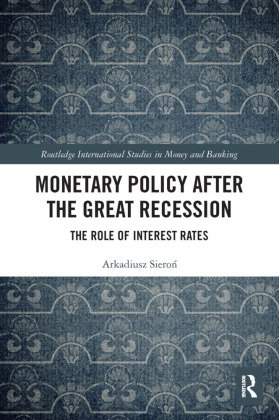
Walter Bagehot noticed once that "John Bull can stand many things, but he cannot stand two per cent." Well, for several years, he has had to stand interest rates well below that, in some countries even below zero. However, despite this sacrifice, the economic recovery from the Great Recession has been disappointingly weak. This book's aim is to answer this question.
The central thesis of the book is that the standard understanding of the monetary transmission mechanism is flawed. That understanding adopts erroneous assumptions-such as, that low interest rates always stimulate economic growth by boosting the credit supply, investment, and consumption-and does not fully take into account several unintended channels of monetary policy, such as risk-taking, high level of debt, or zombification of the economy. In other words, the effectiveness of monetary policy is limited during economic downturns accompanied by the debt overhang and the balance sheet recession, and generates negative effects, which can make the policy counterproductive.
The author provides a thorough analysis of the issues related to the interest rates in the conduct of monetary policy, such as the risk-taking channel of monetary policy, the portfolio-balance channel and the wealth effect, zombie firms in the economy, the misallocation of resources, as well as the neutral interest rate targeting and the difference between the neutral and natural interest rate and the negative interest rate policy.
The book is written in an accessible and engaging manner and will be a valuable resource for scholars of monetary economics as well as readers interested in (unconventional) monetary policy.