






Diese Website verwendet Cookies und ähnliche Technologien. Dabei handelt es sich um kleine Textdateien, die auf eurem Computer gespeichert und ausgelesen werden. Indem ihr auf "Alles akzeptieren" klickt, stimmt ihr der Verarbeitung von Daten, der Erstellung und Verarbeitung von individuellen Nutzungsprofilen über Websites und über Partner und Geräte hinweg sowie der Übermittlung eurer Daten an Drittanbieter zu, die eure Daten teilweise in Ländern außerhalb der Europäischen Union verarbeiten (GDPR Art. 49). Einzelheiten hierzu findet ihr in den Datenschutzhinweisen. Die Daten werden für Analysen und für eigene Zwecke Dritter verwendet. Weitere Informationen, auch über die Datenverarbeitung durch Drittanbieter und die Möglichkeit des Widerrufs, findet ihr in den Einstellungen und in unseren Datenschutzhinweisen. Hier könnt ihr mit den notwendigen Tools fortfahren.
- Verlag: Taylor & Francis
- Autor: Yasushi Suzuki
- Artikel-Nr.: KNV96364344
- ISBN: 9780367644512
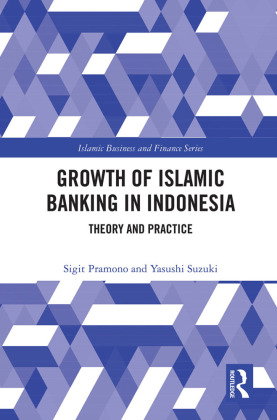
Indonesia is the most populous Muslim country in the world. Taking into account also its endowment and potential economic resources, the Islamic banking industry in Indonesia was expected to take on an important role in facilitating more financial resources and to contribute to the internationalization of the Islamic mode of financing particularly in the Asia-Pacific region. However, the reality is far from the expectation. This book aims to clarify the causes and fundamental constraints leading to the extraordinarily low level of Indonesia's Islamic financial deepening.
The authors draw on the traditions of Institutional Economics which are concerned with the rules or mechanisms of creating the 'incentive' and 'threat' for economic players because the rules (institutions) would matter as the determinant for economic development and economic efficiency. This book offers a fairly new analytical lens by hypothesizing that Islamic banks must earn additional profit- the authors coined as 'Islamic bank rent' - to maintain their franchise value as prudent Shari'ah-compliant lenders when compared to conventional banks. The authors argued that insufficient provision of the Islamic bank rent opportunity may have caused the Indonesia's Islamic banks the opportunity to learn and improve their skill and capacity for the credit risk management. The book also offers evidence in support of implementing economic and affirmative policy necessary for incubating and developing the Islamic banking industry in Indonesia and making Indonesia an international Islamic financial hub in the Asia-Pacific region.
This book will be a useful resource for policy makers and researchers interested in Islamic banking in Indonesia.