






Diese Website verwendet Cookies und ähnliche Technologien. Dabei handelt es sich um kleine Textdateien, die auf eurem Computer gespeichert und ausgelesen werden. Indem ihr auf "Alles akzeptieren" klickt, stimmt ihr der Verarbeitung von Daten, der Erstellung und Verarbeitung von individuellen Nutzungsprofilen über Websites und über Partner und Geräte hinweg sowie der Übermittlung eurer Daten an Drittanbieter zu, die eure Daten teilweise in Ländern außerhalb der Europäischen Union verarbeiten (GDPR Art. 49). Einzelheiten hierzu findet ihr in den Datenschutzhinweisen. Die Daten werden für Analysen und für eigene Zwecke Dritter verwendet. Weitere Informationen, auch über die Datenverarbeitung durch Drittanbieter und die Möglichkeit des Widerrufs, findet ihr in den Einstellungen und in unseren Datenschutzhinweisen. Hier könnt ihr mit den notwendigen Tools fortfahren.
- Verlag: Taylor & Francis
- Autor: Camelia Oancea
- Artikel-Nr.: KNV96360609
- ISBN: 9780367523428
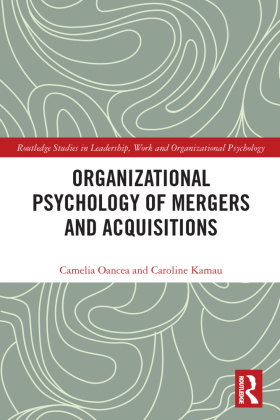
Organizational Psychology of Mergers and Acquisitions provides a comprehensive perspective that helps you understand, empathise and protect the wellbeing of employees who experience mergers and acquisitions. This book gives a state-of-the-art review that crosses different subjects within psychology including psychobiology, neuroscience, social psychology, interpersonal relationships, and organizational psychology.
This book discusses why many employees think of mergers or acquisitions as scary or threatening events, why negative emotions are prevalent, their psychobiological impact and how to assess employees' emotional responses using a new toolkit. It helps readers learn what counts as good leadership, considering the role of charisma, personality, context and information processing abilities. This book includes the issue of organizational learning, and the relevance of occupational health and safety to due diligence about mergers and acquisitions through case studies about organizations sued for cancer or cancer-related mortality after a merger or acquisition.
This book is mandatory reading for students, academics, and practitioners working with organizations experiencing a merger or an acquisition such as consultants, human resource professionals, psychologists, occupational health professionals, and employees involved in strategy, management, or people development.