






Diese Website verwendet Cookies und ähnliche Technologien. Dabei handelt es sich um kleine Textdateien, die auf eurem Computer gespeichert und ausgelesen werden. Indem ihr auf "Alles akzeptieren" klickt, stimmt ihr der Verarbeitung von Daten, der Erstellung und Verarbeitung von individuellen Nutzungsprofilen über Websites und über Partner und Geräte hinweg sowie der Übermittlung eurer Daten an Drittanbieter zu, die eure Daten teilweise in Ländern außerhalb der Europäischen Union verarbeiten (GDPR Art. 49). Einzelheiten hierzu findet ihr in den Datenschutzhinweisen. Die Daten werden für Analysen und für eigene Zwecke Dritter verwendet. Weitere Informationen, auch über die Datenverarbeitung durch Drittanbieter und die Möglichkeit des Widerrufs, findet ihr in den Einstellungen und in unseren Datenschutzhinweisen. Hier könnt ihr mit den notwendigen Tools fortfahren.
- Verlag: Taylor & Francis
- Autor: Michael Filimowicz
- Artikel-Nr.: KNV96360576
- ISBN: 9781032002415
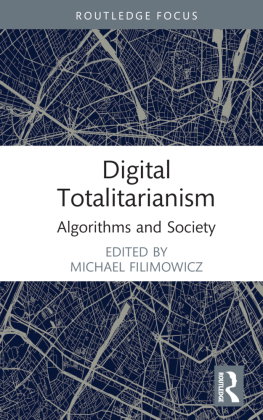
Digital Totalitarianism: Algorithms and Society focuses on important challenges to democratic values posed by our computational regimes: policing the freedom of inquiry, risks to the personal autonomy of thought, NeoLiberal management of human creativity, and the collapse of critical thinking with the social media fueled rise of conspiranoia.
Digital networks allow for a granularity and pervasiveness of surveillance by government and corporate entities. This creates power asymmetries where each citizen's daily 'data exhaust' can be used for manipulative and controlling ends by powerful institutional actors. This volume explores key erosions in our fundamental human values associated with free societies by covering government surveillance of library-based activities, cognitive enhancement debates, the increasing business orientation of art schools, and the proliferation of conspiracy theories in network media.
Scholars and students from many backgrounds, as well as policy makers, journalists and the general reading public will find a multidisciplinary approach to questions of totalitarian tendencies encompassing research from Communication, Rhetoric, Library Sciences, Art and New Media.