






Diese Website verwendet Cookies und ähnliche Technologien. Dabei handelt es sich um kleine Textdateien, die auf eurem Computer gespeichert und ausgelesen werden. Indem ihr auf "Alles akzeptieren" klickt, stimmt ihr der Verarbeitung von Daten, der Erstellung und Verarbeitung von individuellen Nutzungsprofilen über Websites und über Partner und Geräte hinweg sowie der Übermittlung eurer Daten an Drittanbieter zu, die eure Daten teilweise in Ländern außerhalb der Europäischen Union verarbeiten (GDPR Art. 49). Einzelheiten hierzu findet ihr in den Datenschutzhinweisen. Die Daten werden für Analysen und für eigene Zwecke Dritter verwendet. Weitere Informationen, auch über die Datenverarbeitung durch Drittanbieter und die Möglichkeit des Widerrufs, findet ihr in den Einstellungen und in unseren Datenschutzhinweisen. Hier könnt ihr mit den notwendigen Tools fortfahren.
- Verlag: Taylor & Francis
- Autor: Jil Winandy
- Artikel-Nr.: KNV96360568
- ISBN: 9781032070759
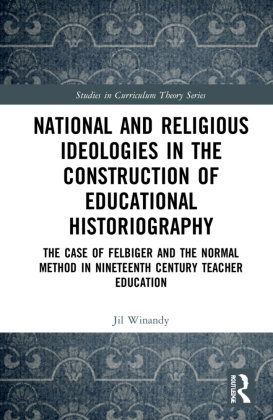
Documenting the reception of the pre-eminent Austrian school reformer Johann Ignaz Felbiger and his pedagogical thought in European histories of education in the nineteenth century, this volume demonstrates how national and religious ideological preferences have propelled the construction of fundamental biases in educational historiography.
Covering more than 200 years and multiple national contexts, this book's case studies of France and Switzerland, as well as close analysis of historical documents and textbooks, reveal how a canon of glorified historical "heroes" have been promoted over and above other educational actors, with the aim of morally instructing future teachers according to national and religious values. Based on a strong array of historical sources, the author demonstrates how biased educational historiographies are utilized in gaining support for certain pedagogical and curricula models. Through the deep examination of textbooks used in teacher training and the explication of the work and actual influence of Felbiger's method in Catholic parts of Europe, this book captures how these narratives impact our understanding of early national histories.
Offering new knowledge in the history of curriculum studies, this volume will be of interest to scholars and researchers with an interest in the history of education, as well as comparative teacher education.