






Diese Website verwendet Cookies und ähnliche Technologien. Dabei handelt es sich um kleine Textdateien, die auf eurem Computer gespeichert und ausgelesen werden. Indem ihr auf "Alles akzeptieren" klickt, stimmt ihr der Verarbeitung von Daten, der Erstellung und Verarbeitung von individuellen Nutzungsprofilen über Websites und über Partner und Geräte hinweg sowie der Übermittlung eurer Daten an Drittanbieter zu, die eure Daten teilweise in Ländern außerhalb der Europäischen Union verarbeiten (GDPR Art. 49). Einzelheiten hierzu findet ihr in den Datenschutzhinweisen. Die Daten werden für Analysen und für eigene Zwecke Dritter verwendet. Weitere Informationen, auch über die Datenverarbeitung durch Drittanbieter und die Möglichkeit des Widerrufs, findet ihr in den Einstellungen und in unseren Datenschutzhinweisen. Hier könnt ihr mit den notwendigen Tools fortfahren.
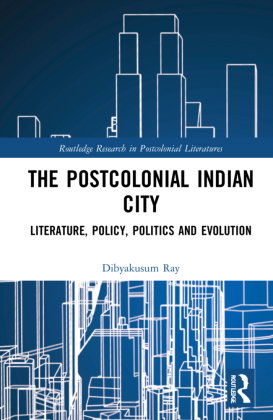
- Verlag: Taylor & Francis
- Autor: Dibyakusum Ray
- Artikel-Nr.: KNV96360671
- ISBN: 9780367763008
How is the city represented through literature from the post-colonies? This book searches for an answer to this question, by keeping its focus on India-from after Independence to the millennia. How does the urban space and the literature depicting it form a dialogue within? How have Indian cities grown in the past six decades, as well as the literature focused on it? How does the city-lit depart from organic realism to dissonant themes of "reclamation"? Most importantly-who does the city (and its narratives) belong to?
Through the juxtaposition of critical theories, sociological data, urban studies and variant literary works by a wide range of Indian authors, this book is divided into four temporal phases: the nation-building of the 50-60s, the dictatorial 70s, the neoliberalization of the 80-90s and the early 2000s. Each section covers the dominant socio-political thematics of the time and its effect on urbanism along with historical data from various resources, followed by an analysis of contemporaneously significant literary works-novel, short stories, plays, poetry and graphic novel. Each chapter comments on how literature, perceived as a historical phenomenon, frames real and imagined constructs and experiences of cities. To give the reader a more expansive idea of the complex nature of city-lit, the literary examples abound not only "Indian Writings in English," but vernacular, cult-works as well with suitable translations.
With its focus on philosophy, urban studies and a unique canon of literature, this book offers elements of critical discussion to researchers, emergent university disciplines and curious readers alike.