






Diese Website verwendet Cookies und ähnliche Technologien. Dabei handelt es sich um kleine Textdateien, die auf eurem Computer gespeichert und ausgelesen werden. Indem ihr auf "Alles akzeptieren" klickt, stimmt ihr der Verarbeitung von Daten, der Erstellung und Verarbeitung von individuellen Nutzungsprofilen über Websites und über Partner und Geräte hinweg sowie der Übermittlung eurer Daten an Drittanbieter zu, die eure Daten teilweise in Ländern außerhalb der Europäischen Union verarbeiten (GDPR Art. 49). Einzelheiten hierzu findet ihr in den Datenschutzhinweisen. Die Daten werden für Analysen und für eigene Zwecke Dritter verwendet. Weitere Informationen, auch über die Datenverarbeitung durch Drittanbieter und die Möglichkeit des Widerrufs, findet ihr in den Einstellungen und in unseren Datenschutzhinweisen. Hier könnt ihr mit den notwendigen Tools fortfahren.
- Verlag: Taylor & Francis
- Autor: Deborah Wright
- Artikel-Nr.: KNV96360653
- ISBN: 9781032035956
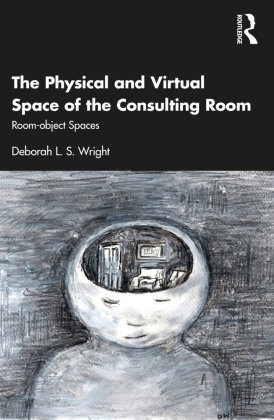
In this thought-provoking book, Deborah Wright examines the role of both space and objects as they become manifest in the psychoanalytic process and looks at how the role of the consulting room in the therapeutic process is both primitive and transferential.
Wright explores spatialisation as simultaneously being a psychological projection of meaning and as physically acting upon the environment, utilised to master the undifferentiated, relentless, internal pressure of instinct. Throughout The Physical and Virtual Space of the Consulting Room, she considers the spatial aspects of work with patients by foregrounding the importance of the consulting room and its contents, including the impact of changes of consulting room, travelling, and in working virtually. Illustrated with clinical material and hand-drawn artwork, Wright orients the reader in the new territory by going beyond the existing literature that considers the objects and space of the consulting room solely as transferential aspects of the analyst.
The interdisciplinary approach in this book calls on psychoanalytic theory and technique as well as philosophy, history, archaeology, and anthropology, which will be of great interest to all psychoanalytically orientated therapists as well as anyone, clinical or non-clinical, who makes use of psychoanalysis.