






Diese Website verwendet Cookies und ähnliche Technologien. Dabei handelt es sich um kleine Textdateien, die auf eurem Computer gespeichert und ausgelesen werden. Indem ihr auf "Alles akzeptieren" klickt, stimmt ihr der Verarbeitung von Daten, der Erstellung und Verarbeitung von individuellen Nutzungsprofilen über Websites und über Partner und Geräte hinweg sowie der Übermittlung eurer Daten an Drittanbieter zu, die eure Daten teilweise in Ländern außerhalb der Europäischen Union verarbeiten (GDPR Art. 49). Einzelheiten hierzu findet ihr in den Datenschutzhinweisen. Die Daten werden für Analysen und für eigene Zwecke Dritter verwendet. Weitere Informationen, auch über die Datenverarbeitung durch Drittanbieter und die Möglichkeit des Widerrufs, findet ihr in den Einstellungen und in unseren Datenschutzhinweisen. Hier könnt ihr mit den notwendigen Tools fortfahren.
- Verlag: Taylor & Francis
- Autor: Gyan P. Nyaupane
- Artikel-Nr.: KNV96360652
- ISBN: 9780367466275
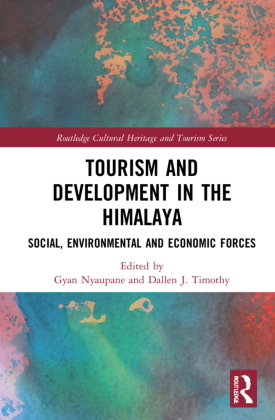
This book examines the unique characteristics of the Himalaya that mark them as a special region among other orographic regions of the world. The Himalayan range is an important global asset for ecological, climatic, cultural, spiritual, and economic reasons. Its diversity of landscapes, climates, and biotic systems makes the Himalaya an extremely attractive region for tourism. The book examines tourism and development in the Himalaya region, exploring its sociocultural, environmental, and economic dimensions.
The contributors address Himalayan issues from a holistic perspective, emphasizing the uniqueness of the region, together with concerns it shares with other montane, developing parts of the world. With a framework of sustainable development, this book elucidates interdisciplinary perspectives on nature, society, economic development, poverty, justice, health, social and environmental vulnerability, faith and culture, Indigenous rights, women, conflict, heritage and living culture, and many other concepts that broaden our understanding of tourism and development in mountain areas. Many contributors are from the Himalaya region, or have worked there extensively, lending strength through native and insider perspectives.
This work will be useful for advanced undergraduate and graduate students, research and teaching scholars, policy makers, practitioners, and anyone interested in the Himalaya and their distinctive tourism and development-related potential and challenges.