






Diese Website verwendet Cookies und ähnliche Technologien. Dabei handelt es sich um kleine Textdateien, die auf eurem Computer gespeichert und ausgelesen werden. Indem ihr auf "Alles akzeptieren" klickt, stimmt ihr der Verarbeitung von Daten, der Erstellung und Verarbeitung von individuellen Nutzungsprofilen über Websites und über Partner und Geräte hinweg sowie der Übermittlung eurer Daten an Drittanbieter zu, die eure Daten teilweise in Ländern außerhalb der Europäischen Union verarbeiten (GDPR Art. 49). Einzelheiten hierzu findet ihr in den Datenschutzhinweisen. Die Daten werden für Analysen und für eigene Zwecke Dritter verwendet. Weitere Informationen, auch über die Datenverarbeitung durch Drittanbieter und die Möglichkeit des Widerrufs, findet ihr in den Einstellungen und in unseren Datenschutzhinweisen. Hier könnt ihr mit den notwendigen Tools fortfahren.
- Verlag: Taylor & Francis
- Autor: Ronald Barnett
- Artikel-Nr.: KNV96360635
- ISBN: 9780367610289
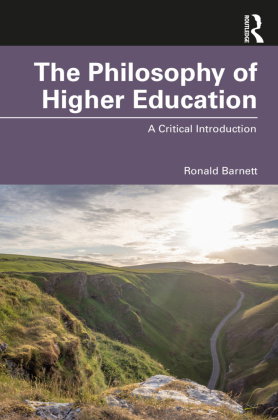
Providing a comprehensive introduction to the philosophy of higher education this book steps nimbly through the field, leading it into new areas and advancing an imaginative ecological realism.
Each chapter takes the form of a short essay, tackling a particular topic such as values, knowledge, teaching, critical thinking and social justice. It also examines key issues including academic freedom, the digital university and the Anthropocene, and draws on classic as well as contemporary texts in the field.
Composed of five parts, the book travels on a compelling journey:
- Part one identifies foundations of the field, distinguishing between the ideas of university and higher education,
- Part two examines key concepts, including research, culture, academic freedom and reason,
- Part three focuses on higher education as a set of educational practices and being a student,
- Part four is concerned with the university as an institution and includes the matters of leadership and the spirit of the university,
- Part five turns to the university in the world, and argues for an ecological perspective.
Written in a lively and accessible style, and ideal for anyone coming to the field for the first time but also of interest to experienced scholars, this book offers sightings of new possibilities for higher education and the university.