






Diese Website verwendet Cookies und ähnliche Technologien. Dabei handelt es sich um kleine Textdateien, die auf eurem Computer gespeichert und ausgelesen werden. Indem ihr auf "Alles akzeptieren" klickt, stimmt ihr der Verarbeitung von Daten, der Erstellung und Verarbeitung von individuellen Nutzungsprofilen über Websites und über Partner und Geräte hinweg sowie der Übermittlung eurer Daten an Drittanbieter zu, die eure Daten teilweise in Ländern außerhalb der Europäischen Union verarbeiten (GDPR Art. 49). Einzelheiten hierzu findet ihr in den Datenschutzhinweisen. Die Daten werden für Analysen und für eigene Zwecke Dritter verwendet. Weitere Informationen, auch über die Datenverarbeitung durch Drittanbieter und die Möglichkeit des Widerrufs, findet ihr in den Einstellungen und in unseren Datenschutzhinweisen. Hier könnt ihr mit den notwendigen Tools fortfahren.
- Verlag: Taylor & Francis
- Autor: Beata Glinka
- Artikel-Nr.: KNV96364353
- ISBN: 9780367523213
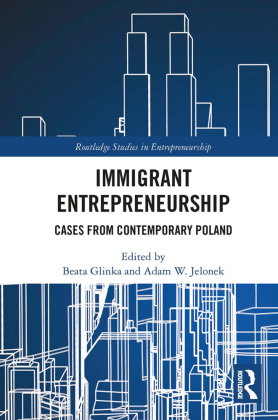
Immigration is currently one of the most vivid challenges the European Union faces. Ways of introducing new migrants to society and economy pose significant challenges, thus some guidelines for the policy design towards migrations are in need. This book points out patterns of approaches leading to entrepreneurial activities, implemented by the immigrants from the Far East: China, Vietnam, South Korea, India, and Philippines. At these stage comparisons with other countries are both possible and necessary, as many countries all over the world face challenges connected with defining migration policies. From the studies included in the book, readers will gain first-hand knowledge about immigrant entrepreneurship in Poland against the Western European or USA background of similar processes described by researchers in other countries.
The areas covered in the studies include the main reasons for starting new ventures and the sources of opportunities, processes of defining customers and factors influencing the choice between an ethnic and local business, immigrants' approaches to building market position, defining success and development, as well as the issues of cultural, institutional, legal and economic differences. The studies show that significant differences in entrepreneurial activities appear between the first and second generations of immigrants. They also depict how entrepreneurial activities help in assimilation processes, as well as in building ties between the immigrants and host societies. Moreover, the study will deepen the understanding of entrepreneurial activities of immigrants in countries that are traditionally considered to be less attractive targets for migration. Thus, the processes of migration will be not only better understood and described but will also allow to provide some guidelines both for policymakers and future researchers