






Diese Website verwendet Cookies und ähnliche Technologien. Dabei handelt es sich um kleine Textdateien, die auf eurem Computer gespeichert und ausgelesen werden. Indem ihr auf "Alles akzeptieren" klickt, stimmt ihr der Verarbeitung von Daten, der Erstellung und Verarbeitung von individuellen Nutzungsprofilen über Websites und über Partner und Geräte hinweg sowie der Übermittlung eurer Daten an Drittanbieter zu, die eure Daten teilweise in Ländern außerhalb der Europäischen Union verarbeiten (GDPR Art. 49). Einzelheiten hierzu findet ihr in den Datenschutzhinweisen. Die Daten werden für Analysen und für eigene Zwecke Dritter verwendet. Weitere Informationen, auch über die Datenverarbeitung durch Drittanbieter und die Möglichkeit des Widerrufs, findet ihr in den Einstellungen und in unseren Datenschutzhinweisen. Hier könnt ihr mit den notwendigen Tools fortfahren.
- Verlag: Taylor & Francis
- Autor: Deborah Lynn Porter
- Artikel-Nr.: KNV96360736
- ISBN: 9781032103969
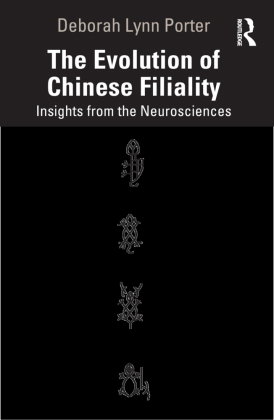
This unique book brings a fresh interdisciplinary approach to the analysis of ancient Chinese history, creating a historical model for the emergence of cultural mainstays by applying recent dramatic findings in the fields of neuroscience and cultural evolution.
The centrality in Chinese culture of a deep reverence for the lives of preceding generations, filial piety, is conventionally attributed to Confucius (551-479 B.C.), who viewed hierarchical family relations as foundational for social order. Here, Porter argues that Confucian conceptions of filiality themselves evolved from a systemized set of behaviors and thoughts, a mental structure, which descended from a specific Neolithic mindset, and that this psychological structure was contoured by particular emotional conditions experienced by China's earliest farmers. Using case study analysis from Neolithic sky observers to the dynastic cultures of the Shang and Western Zhou, the book shows how filial piety evolved as a structure of feeling, a legacy of a cultural predisposition toward particular moods and emotions that were inherited from the ancestral past. Porter also brings new urgency to the topic of ecological grief, linking the distress central to the evolution of the filial structure to its catalyst in an environmental crisis.
With a blended multidisciplinary approach combining social neuroscience, cultural evolution, cognitive archaeology, and historical analysis, this book is ideal for students and researchers in neuropsychology, religion, and Chinese culture and history.