






Diese Website verwendet Cookies und ähnliche Technologien. Dabei handelt es sich um kleine Textdateien, die auf eurem Computer gespeichert und ausgelesen werden. Indem ihr auf "Alles akzeptieren" klickt, stimmt ihr der Verarbeitung von Daten, der Erstellung und Verarbeitung von individuellen Nutzungsprofilen über Websites und über Partner und Geräte hinweg sowie der Übermittlung eurer Daten an Drittanbieter zu, die eure Daten teilweise in Ländern außerhalb der Europäischen Union verarbeiten (GDPR Art. 49). Einzelheiten hierzu findet ihr in den Datenschutzhinweisen. Die Daten werden für Analysen und für eigene Zwecke Dritter verwendet. Weitere Informationen, auch über die Datenverarbeitung durch Drittanbieter und die Möglichkeit des Widerrufs, findet ihr in den Einstellungen und in unseren Datenschutzhinweisen. Hier könnt ihr mit den notwendigen Tools fortfahren.
- Verlag: Taylor & Francis
- Autor: Andrei P. Tsygankov
- Artikel-Nr.: KNV96360725
- ISBN: 9781032162300
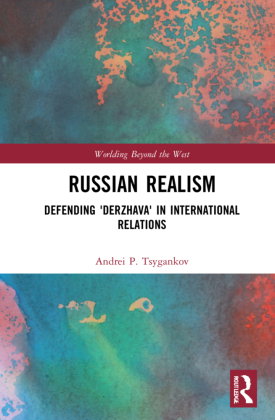
Russian Realism analyzes Russian contemporary geopolitical thinking, or realism, and explores the notion of Derzhava as the foundation of Russian realism.
The author defines Russian realists as all those favoring actions by the Russian state in defense of its interests, including protection of national sovereignty, security, power, and prestige on the international scene. What makes Russian realism distinct is its "vision of Russianness" formed by the country's historical, cultural/religious experience, and its semi-peripheral position in the international system. The vision stresses the importance of survival, preservation of strong state, and protection of national interests from external infringement.
Mainstream literature, especially in the West, tends to ignore Russian theoretical debates and narratives; this book remedies this by providing significant insights into Russian realist thinking. It explores the historical unfolding of the longstanding national debates about Russia's role in Europe/the West and how realists have reframed these debates in response to multiple international and domestic developments. The book also identifies distinct groups and debates within the broad school of Russian realism.
This book will be of interest to students and scholars of Russian foreign policy, IR theory, diplomatic studies, political science, and European history. It will also appeal to a broader general audience of those interested in Russia and international politics.