






Diese Website verwendet Cookies und ähnliche Technologien. Dabei handelt es sich um kleine Textdateien, die auf eurem Computer gespeichert und ausgelesen werden. Indem ihr auf "Alles akzeptieren" klickt, stimmt ihr der Verarbeitung von Daten, der Erstellung und Verarbeitung von individuellen Nutzungsprofilen über Websites und über Partner und Geräte hinweg sowie der Übermittlung eurer Daten an Drittanbieter zu, die eure Daten teilweise in Ländern außerhalb der Europäischen Union verarbeiten (GDPR Art. 49). Einzelheiten hierzu findet ihr in den Datenschutzhinweisen. Die Daten werden für Analysen und für eigene Zwecke Dritter verwendet. Weitere Informationen, auch über die Datenverarbeitung durch Drittanbieter und die Möglichkeit des Widerrufs, findet ihr in den Einstellungen und in unseren Datenschutzhinweisen. Hier könnt ihr mit den notwendigen Tools fortfahren.
- Verlag: Taylor & Francis
- Autor: John Solomos
- Artikel-Nr.: KNV96364407
- ISBN: 9781857286335
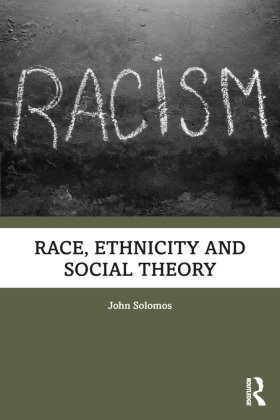
Race, Ethnicity and Social Theory provides a critical analysis of the main areas of scholarly research and debate about racial and ethnic relations over the past few decades. The book covers substantive areas of scholarly debate in this fast-changing field, including race and social relations, identities and the construction of the racial other, feminism and race, the relationship between race and nationalism, antisemitism, the evolution of new forms of racism, race and political representation and, more generally, the changing debates about race and ethnicity in our global environment.
The book argues that there is a need for more dialogue across national and conceptual boundaries about how to develop the theoretical tools needed to understand both the historical roots of contemporary forms of racialised social and political relations and the contemporary forms through which race is made and re-made. A key argument that runs through the book is the need to develop conceptual frameworks that can help us to make sense of the changing forms of racial and ethnic relations in contemporary societies. This means developing more dialogue across national research cultures as well as empirical research that seeks to engage with the key issues raised by contemporary theoretical debates.
The book will be of interest to both students wanting to develop a deeper understanding of this area of scholarship and to researchers of race, ethnicity and migration working in various national and disciplinary environments.