






Diese Website verwendet Cookies und ähnliche Technologien. Dabei handelt es sich um kleine Textdateien, die auf eurem Computer gespeichert und ausgelesen werden. Indem ihr auf "Alles akzeptieren" klickt, stimmt ihr der Verarbeitung von Daten, der Erstellung und Verarbeitung von individuellen Nutzungsprofilen über Websites und über Partner und Geräte hinweg sowie der Übermittlung eurer Daten an Drittanbieter zu, die eure Daten teilweise in Ländern außerhalb der Europäischen Union verarbeiten (GDPR Art. 49). Einzelheiten hierzu findet ihr in den Datenschutzhinweisen. Die Daten werden für Analysen und für eigene Zwecke Dritter verwendet. Weitere Informationen, auch über die Datenverarbeitung durch Drittanbieter und die Möglichkeit des Widerrufs, findet ihr in den Einstellungen und in unseren Datenschutzhinweisen. Hier könnt ihr mit den notwendigen Tools fortfahren.
- Verlag: Taylor & Francis
- Autor: Simon Cottee
- Artikel-Nr.: KNV96364399
- ISBN: 9781032245973
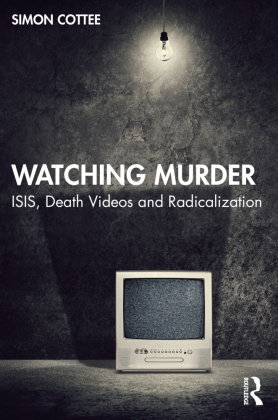
Images and videos of murder, torture and other cruelties are everywhere on the internet. Why do some people seek out and watch this material, how are they affected by it and do they have a right to watch any of it in the first place? In this ground-breaking book, terrorism scholar Simon Cottee visits the murky fringes of the internet in search of answers. Focusing on ISIS, he shows how the group transformed the urban myth of the snuff movie into a grim reality watched by tens of thousands of people across the globe. On shock-sites, he finds a contingent of ISIS fans who, while hating the group, love to watch its most monstrous depredations in high definition. He interviews his fellow extremism researchers and asks them about all the dark things they have seen online and how this has affected their mental health. He speaks with the "cleaners" whose job is to report and remove violent jihadi propaganda from the internet. And he surveys thousands of young adults to find out what they think of ISIS and its notorious beheading videos. Cottee exposes the hysteria around online radicalization, and shows how our engagement with violent online spectacles is much more complex and multifaceted than many would have us believe.
Watching Murder will appeal to anyone with an interest in violence, media, terrorism and ISIS. It will be of particular interest to students and scholars of terrorism studies, political science, culture and communication.