






Diese Website verwendet Cookies und ähnliche Technologien. Dabei handelt es sich um kleine Textdateien, die auf eurem Computer gespeichert und ausgelesen werden. Indem ihr auf "Alles akzeptieren" klickt, stimmt ihr der Verarbeitung von Daten, der Erstellung und Verarbeitung von individuellen Nutzungsprofilen über Websites und über Partner und Geräte hinweg sowie der Übermittlung eurer Daten an Drittanbieter zu, die eure Daten teilweise in Ländern außerhalb der Europäischen Union verarbeiten (GDPR Art. 49). Einzelheiten hierzu findet ihr in den Datenschutzhinweisen. Die Daten werden für Analysen und für eigene Zwecke Dritter verwendet. Weitere Informationen, auch über die Datenverarbeitung durch Drittanbieter und die Möglichkeit des Widerrufs, findet ihr in den Einstellungen und in unseren Datenschutzhinweisen. Hier könnt ihr mit den notwendigen Tools fortfahren.
- Verlag: Taylor & Francis
- Autor: Velika Ivkovska
- Artikel-Nr.: KNV96364388
- ISBN: 9780367536558
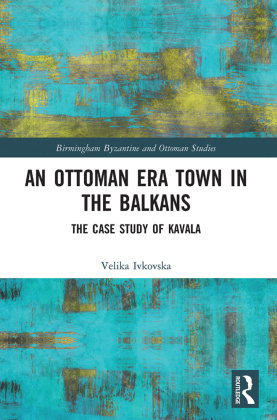
An Ottoman Era Town in the Balkans: The Case Study of Kavala presents the town of Kavala in Northern Greece as an example of Ottoman urban and residential development, covering the long period of Kavala's expansion over five centuries under Ottoman rule. Kavala was part of the Ottoman Empire from 1387 to 1912. In the middle of the sixteenth century, Ibrahim Pasha, grand vizier of Suleiman the Magnificent, contributed to the town's prosperity and growth by the construction of an aqueduct. The Ottomans also rebuilt and extended the existing Byzantine fortress.
The book uncovers new findings about Kavala, and addresses the key question: is there an authentic "Ottoman" built environment that the town and its architecture share? Through the examination of travellers' accounts, historical maps, and archival documents, the Ottoman influences on the urban settlement of Kavala are assessed. From its original founding by the Ottomans in the late fourteenth century to the nineteenth century when the expansion of tobacco production in the area transformed its prosperity, the development of Kavala as an Ottoman era town is explored.
The book will be of interest to scholars and students interested in Ottoman history and urban history.