






Diese Website verwendet Cookies und ähnliche Technologien. Dabei handelt es sich um kleine Textdateien, die auf eurem Computer gespeichert und ausgelesen werden. Indem ihr auf "Alles akzeptieren" klickt, stimmt ihr der Verarbeitung von Daten, der Erstellung und Verarbeitung von individuellen Nutzungsprofilen über Websites und über Partner und Geräte hinweg sowie der Übermittlung eurer Daten an Drittanbieter zu, die eure Daten teilweise in Ländern außerhalb der Europäischen Union verarbeiten (GDPR Art. 49). Einzelheiten hierzu findet ihr in den Datenschutzhinweisen. Die Daten werden für Analysen und für eigene Zwecke Dritter verwendet. Weitere Informationen, auch über die Datenverarbeitung durch Drittanbieter und die Möglichkeit des Widerrufs, findet ihr in den Einstellungen und in unseren Datenschutzhinweisen. Hier könnt ihr mit den notwendigen Tools fortfahren.
- Verlag: Springer, Berlin
- Autor: Xiao Xiong
- Artikel-Nr.: KNV96453474
- ISBN: 9789819930630
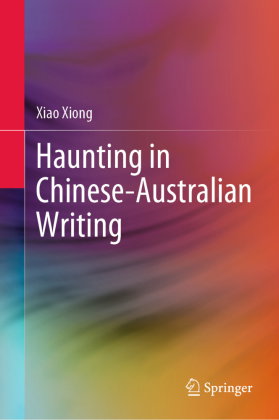
This book examines haunting in terms of trauma, languaging, and the supernatural in works by Chinese Australian writers born in Australia, Mainland China, Hong Kong, Malaysia, and Singapore. It goes beyond the conventional focus on identity issues in the analysis of diasporic writing, considering how the memory of past trauma is triggered by abusive systems of power in the present. The author unpacks how trauma also brings past violence to haunt the present. This book considers how different Chinese diasporic communities present a dynamic and multiple state through partial erasure between different Chinese subcultures and other cultures.
Showing the supernatural as a social and cultural product, this book elucidates how haunting as the supernatural refers to the coexistence of, and the competition between, different cultures and powers. It takes a wide-ranging view of different diasporic communities under the banner 'Chinese', a term that refers not only to Chinese nationals in terms of citizenship, but also to the Chinese diaspora in terms of ancestry, and Chinese culture more generally. In analysing haunting in texts, the author positions Chinese culture as in a constant state of flux. It is relevant to literary scholars and students with interests in Australian literature, Chinese and Southeast Asian migration writing, and those with an interest in the Gothic and postcolonial traditions.