






Diese Website verwendet Cookies und ähnliche Technologien. Dabei handelt es sich um kleine Textdateien, die auf eurem Computer gespeichert und ausgelesen werden. Indem ihr auf "Alles akzeptieren" klickt, stimmt ihr der Verarbeitung von Daten, der Erstellung und Verarbeitung von individuellen Nutzungsprofilen über Websites und über Partner und Geräte hinweg sowie der Übermittlung eurer Daten an Drittanbieter zu, die eure Daten teilweise in Ländern außerhalb der Europäischen Union verarbeiten (GDPR Art. 49). Einzelheiten hierzu findet ihr in den Datenschutzhinweisen. Die Daten werden für Analysen und für eigene Zwecke Dritter verwendet. Weitere Informationen, auch über die Datenverarbeitung durch Drittanbieter und die Möglichkeit des Widerrufs, findet ihr in den Einstellungen und in unseren Datenschutzhinweisen. Hier könnt ihr mit den notwendigen Tools fortfahren.
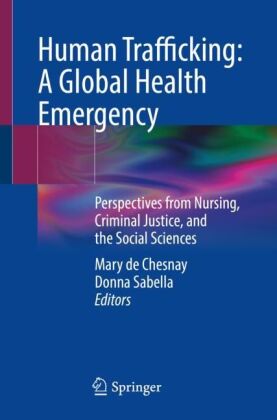
- Verlag: Springer, Berlin
- Autor: Mary de Chesnay
- Artikel-Nr.: KNV96462713
- ISBN: 9783031338748
This book presents various forms of human trafficking, a growing trend in the exploitation of large numbers of people with concurrent public health, socio-cultural, and economic costs to countries burdened with the consequences of the COVID-19 pandemic.
Edited by psychiatric-mental health nurses and an applied anthropologist, this volume covers all forms of human trafficking: sex trafficking, forced labor, forced marriage, baby trafficking, organ trafficking, child marriage, and child soldiers with a global public health and policy focus. As such, it fills a gap in human trafficking knowledge and is built on courses springing up around the United States in multiple disciplines. Medical, mental health, and social work interventions are included as well as information about programs with documented outcomes.
Each chapter includes state of the art of knowledge with case studies illustrating specific focal ideas, discussion, questions and exercises in order to help readers retain and reinforce chapter material. This textbook will be useful in the disciplines of nursing, medicine, public health, social work, and policy making, as well as in disciplines in which human trafficking is a current interest, such as law, criminal justice, and education.