






Diese Website verwendet Cookies und ähnliche Technologien. Dabei handelt es sich um kleine Textdateien, die auf eurem Computer gespeichert und ausgelesen werden. Indem ihr auf "Alles akzeptieren" klickt, stimmt ihr der Verarbeitung von Daten, der Erstellung und Verarbeitung von individuellen Nutzungsprofilen über Websites und über Partner und Geräte hinweg sowie der Übermittlung eurer Daten an Drittanbieter zu, die eure Daten teilweise in Ländern außerhalb der Europäischen Union verarbeiten (GDPR Art. 49). Einzelheiten hierzu findet ihr in den Datenschutzhinweisen. Die Daten werden für Analysen und für eigene Zwecke Dritter verwendet. Weitere Informationen, auch über die Datenverarbeitung durch Drittanbieter und die Möglichkeit des Widerrufs, findet ihr in den Einstellungen und in unseren Datenschutzhinweisen. Hier könnt ihr mit den notwendigen Tools fortfahren.
- Verlag: Springer, Berlin
- Autor: Terrell Carver
- Artikel-Nr.: KNV96462546
- ISBN: 9783030971403
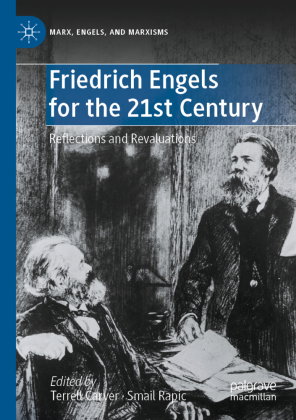
This edited volume presents an interdisciplinary and international revaluation of Friedrich Engels as much more than "junior partner" to Karl Marx or "second fiddle" in the Marxist orchestra. The nineteen critical essays in this collection are the work of scholars from Germany, USA, UK, Italy, China, India, Mexico and the Philippines. Together they present and evaluate archival material and scholarly commentary that covers epistemology, political economy, political theory, gender studies, cultural studies, political geography, philosophy of social science and sociological studies of class-conflict. Students, activists and specialists will find fresh consideration of familiar works, such as The Condition of the Working Class in England, The Origin of the Family, Private Property and the State, and The Dialectics of Nature. They will also be able to explore Engels's less familiar pamphleteering, literary criticism and political commentary through detailed contextualization andcareful analysis. Friedrich Engels for the 21st Century: Perspectives and Problems is unique in putting different intellectual and political receptions of Engels's work into productive conversation, particularly from non-Anglophone scholars, translated here into English. Readers will appreciate why Engels has been so widely celebrated some two hundred years after his birth.