






Diese Website verwendet Cookies und ähnliche Technologien. Dabei handelt es sich um kleine Textdateien, die auf eurem Computer gespeichert und ausgelesen werden. Indem ihr auf "Alles akzeptieren" klickt, stimmt ihr der Verarbeitung von Daten, der Erstellung und Verarbeitung von individuellen Nutzungsprofilen über Websites und über Partner und Geräte hinweg sowie der Übermittlung eurer Daten an Drittanbieter zu, die eure Daten teilweise in Ländern außerhalb der Europäischen Union verarbeiten (GDPR Art. 49). Einzelheiten hierzu findet ihr in den Datenschutzhinweisen. Die Daten werden für Analysen und für eigene Zwecke Dritter verwendet. Weitere Informationen, auch über die Datenverarbeitung durch Drittanbieter und die Möglichkeit des Widerrufs, findet ihr in den Einstellungen und in unseren Datenschutzhinweisen. Hier könnt ihr mit den notwendigen Tools fortfahren.
- Verlag: Thames & Hudson
- Autor: Julian Bell
- Artikel-Nr.: KNV96485320
- ISBN: 9780500024072
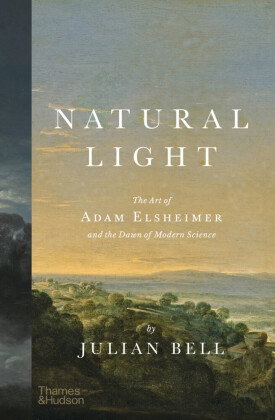
Seventeenth-century Europe swirled with conjectures and debates over what was real and what constituted 'nature', currents that would soon gather force to form modern science. Natural Light deliberates on the era's uncertainties, as distilled in the work of painter Adam Elsheimer - a short-lived, tragic German artist who has always been something of a cult secret. Elsheimer's diminutive, intense and mysterious narrative compositions related figures to landscape in new ways, projecting unfamiliar visions of space at a time when Caravaggio was polarizing audiences with his radical altarpieces and circles of 'natural philosophers' - early modern scientists - were starting to turn to the new 'world system' of Galileo.
Julian Bell transports us to the spirited Rome of the 1600s, where Elsheimer and other young Northern immigrants - notably his friend Peter Paul Rubens - swapped pictorial and poetic reference points. Focusing on some of Elsheimer's most haunting compositions, Bell drives at the anxieties that underlie them - a puzzling over existential questions that still have relevance today. Traditional themes for imagery are expressed with fresh urgency, most of all in Elsheimer's final painting, a vision of the night sky of unprecedented poetic power that was completed at a time of ferment in astronomy.
Circulated through prints, Elsheimer's pictorial inventions affected imaginations as disparate as Rembrandt, Lorrain and Poussin. They even reached artists in Mughal India, whose equally impassioned miniatures expand our sense of what 'nature' might be. As we home in on artworks of microscopic finesse, the whole of the 17th-century globe and its perplexities starts to open out around us.