






Diese Website verwendet Cookies und ähnliche Technologien. Dabei handelt es sich um kleine Textdateien, die auf eurem Computer gespeichert und ausgelesen werden. Indem ihr auf "Alles akzeptieren" klickt, stimmt ihr der Verarbeitung von Daten, der Erstellung und Verarbeitung von individuellen Nutzungsprofilen über Websites und über Partner und Geräte hinweg sowie der Übermittlung eurer Daten an Drittanbieter zu, die eure Daten teilweise in Ländern außerhalb der Europäischen Union verarbeiten (GDPR Art. 49). Einzelheiten hierzu findet ihr in den Datenschutzhinweisen. Die Daten werden für Analysen und für eigene Zwecke Dritter verwendet. Weitere Informationen, auch über die Datenverarbeitung durch Drittanbieter und die Möglichkeit des Widerrufs, findet ihr in den Einstellungen und in unseren Datenschutzhinweisen. Hier könnt ihr mit den notwendigen Tools fortfahren.
- Verlag: De Gruyter
- Autor: Kerstin Barndt
- Artikel-Nr.: KNV96492074
- ISBN: 9783110787405
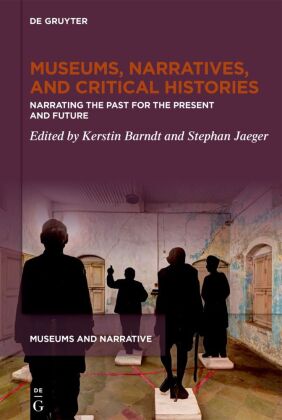
In response to systemic racism and institutions' implications in histories of colonialism, nationalism, and exclusion, museum curators have embraced new ways of storytelling to face entangled memories and histories. Critical museum practices have consciously sought to unsettle established forms of representation, break with linear narratives of progress, and experiment with new modes of multivocal, multimedia, and subjective storytelling. The volume features analyses of narratives and narration in museums and heritage institutions today, as well as visions for future museum practices on a local, regional, national, transnational, and global scale. It is divided into three sections: Narrative Theory and Temporality, Ruptures and Repair, and Difficult Memories and Histories. Essays from a variety of disciplines in the humanities and social sciences examine museum practices in history, memorial, anthropological, and art museums across six continents. They develop narratological categories, reflect on immersive and virtual narratives, challenge colonial violence and hegemonic forms of representation, query the performance of heritage, parse exhibition design, and unearth techniques to express narratives of social justice.