






Diese Website verwendet Cookies und ähnliche Technologien. Dabei handelt es sich um kleine Textdateien, die auf eurem Computer gespeichert und ausgelesen werden. Indem ihr auf "Alles akzeptieren" klickt, stimmt ihr der Verarbeitung von Daten, der Erstellung und Verarbeitung von individuellen Nutzungsprofilen über Websites und über Partner und Geräte hinweg sowie der Übermittlung eurer Daten an Drittanbieter zu, die eure Daten teilweise in Ländern außerhalb der Europäischen Union verarbeiten (GDPR Art. 49). Einzelheiten hierzu findet ihr in den Datenschutzhinweisen. Die Daten werden für Analysen und für eigene Zwecke Dritter verwendet. Weitere Informationen, auch über die Datenverarbeitung durch Drittanbieter und die Möglichkeit des Widerrufs, findet ihr in den Einstellungen und in unseren Datenschutzhinweisen. Hier könnt ihr mit den notwendigen Tools fortfahren.
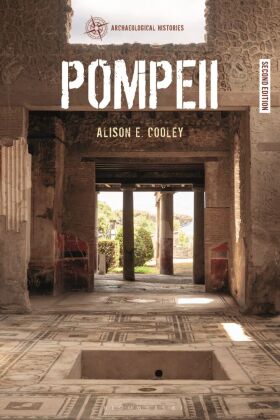
- Verlag: Bloomsbury Trade
- Autor: Alison E. Cooley
- Artikel-Nr.: KNV96472045
- ISBN: 9781350125216
This second edition of Alison E. Cooley's accessible introduction to Pompeii takes into account the major new theories and discoveries that have emerged since the first edition was published 20 years ago.
Italy's third most popular tourist destination, Pompeii attracts millions of visitors each year, and images of the town are familiar all around the world. However, even today our picture of the site is being impacted by new archaeological discoveries. This book focuses particularly on the date of the eruption, the natural environment of Pompeii, the recovery of skeletal remains and plaster casts, and Pompeii in the popular imagination. In addition, three new chapters look at the popularization of Pompeii, archaeological reconstruction of the Roman town, and how we know what we know about the people who lived there.
The technological advances of the 20th and 21st centuries have transformed our understanding of the urban environment of Pompeii, raising new questions even as they dig ever deeper into the surviving material evidence. This volume offers a succinct and insightful exploration of the impact of these scientific and archaeological innovations, as well as that of contemporary politics, upon interpretations of Pompeii over the last 250 years, including the ways in which advances in volcanology have transformed our picture of its last moments.