






Diese Website verwendet Cookies und ähnliche Technologien. Dabei handelt es sich um kleine Textdateien, die auf eurem Computer gespeichert und ausgelesen werden. Indem ihr auf "Alles akzeptieren" klickt, stimmt ihr der Verarbeitung von Daten, der Erstellung und Verarbeitung von individuellen Nutzungsprofilen über Websites und über Partner und Geräte hinweg sowie der Übermittlung eurer Daten an Drittanbieter zu, die eure Daten teilweise in Ländern außerhalb der Europäischen Union verarbeiten (GDPR Art. 49). Einzelheiten hierzu findet ihr in den Datenschutzhinweisen. Die Daten werden für Analysen und für eigene Zwecke Dritter verwendet. Weitere Informationen, auch über die Datenverarbeitung durch Drittanbieter und die Möglichkeit des Widerrufs, findet ihr in den Einstellungen und in unseren Datenschutzhinweisen. Hier könnt ihr mit den notwendigen Tools fortfahren.
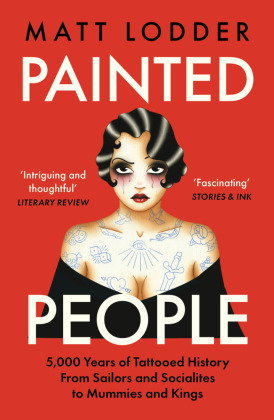
- Verlag: HarperCollins UK
- Autor: Matt Lodder
- Artikel-Nr.: KNV96474780
- ISBN: 9780008402105
Painted People is a beguiling and intimate look at an untold history of humanity.
The earliest tattoos yet identified belonged to Ötzi, the 'iceman', whose mummy allows us a brief glimpse into the prehistory of the practice. We know that over the more than five thousand years since he was tattooed, countless cultures have performed this ancient practice, and people in every corner of the world have been tattooed. For the most part, these fascinating histories remain stubbornly untold, and the secrets of Siberian princesses, Chinese generals and Victorian socialites have been hidden on the skin, under layers of clothing and under layers of history. Now with access to a wealth of new and unreported material, this book will roll up its sleeves and reveal the artwork hidden beneath them.
In Painted People, Dr Matt Lodder, one of the world's foremost experts on tattooing, tells the stories of people like Arnaq, who was tattooed in keeping with her cultural and religious traditions in sixteenth-century Canada, and Horace Ridler, who was tattooed as a means to make money in 1930s London. And in between these two extremes, he describes tattoos inked for love, for loyalty, for sedition and espionage and for self-expression, as well as tattoos inflicted on the unwilling, to ostracise. Taken together, these twenty-one tattoos paint a portrait of humanity as both artist and canvas.