






Diese Website verwendet Cookies und ähnliche Technologien. Dabei handelt es sich um kleine Textdateien, die auf eurem Computer gespeichert und ausgelesen werden. Indem ihr auf "Alles akzeptieren" klickt, stimmt ihr der Verarbeitung von Daten, der Erstellung und Verarbeitung von individuellen Nutzungsprofilen über Websites und über Partner und Geräte hinweg sowie der Übermittlung eurer Daten an Drittanbieter zu, die eure Daten teilweise in Ländern außerhalb der Europäischen Union verarbeiten (GDPR Art. 49). Einzelheiten hierzu findet ihr in den Datenschutzhinweisen. Die Daten werden für Analysen und für eigene Zwecke Dritter verwendet. Weitere Informationen, auch über die Datenverarbeitung durch Drittanbieter und die Möglichkeit des Widerrufs, findet ihr in den Einstellungen und in unseren Datenschutzhinweisen. Hier könnt ihr mit den notwendigen Tools fortfahren.
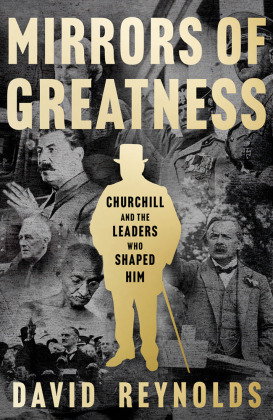
- Verlag: HarperCollins UK
- Autor: David Reynolds
- Artikel-Nr.: KNV96474793
- ISBN: 9780008439927
A TELEGRAPH BEST HISTORY BOOK OF 2023
'A highly imaginative and thought-provoking way of exploring the personality of a man who, like him or loathe him, left an indelible mark on our age' ADAM ZAMOYSKI
Winston Churchill followed his own star. He yearned to be 'great', to gain historical immortality. And he did so through deeds and words: his actions as a soldier and politician, gilded by his writings as a journalist and historian.
But Churchill's path to greatness was also defined by the leaders he encountered along the way - friends and foes, at home and abroad. Men of power such as Hitler and Mussolini, Roosevelt and Stalin, David Lloyd George, Neville Chamberlain and Charles de Gaulle. And the haunting presence of the adored father who had seen nothing of merit in his troublesome son. In these men Churchill discerned greatness, or its absence, in ways that influenced his own career.
This book includes some whom Churchill would not have deemed 'great', but who - in our own day - offer alternative mirrors of what that word might mean. Mahatma Gandhi, who infuriated Churchill by exploiting the power of powerlessness. Clement Attlee, whose heretical vision of 'Great Britain' was socialist and post-imperial. And his darling Clementine, channelling her 'pinko' sentiments to become Winston's essential helpmate and most devoted critic.
Mirrors of Greatness offers vivid new perspectives on Churchill's life and work, showing how this unique man - with dazzling gifts and jagged flaws - learned from his 'great contemporaries' and what they saw in him.