






Diese Website verwendet Cookies und ähnliche Technologien. Dabei handelt es sich um kleine Textdateien, die auf eurem Computer gespeichert und ausgelesen werden. Indem ihr auf "Alles akzeptieren" klickt, stimmt ihr der Verarbeitung von Daten, der Erstellung und Verarbeitung von individuellen Nutzungsprofilen über Websites und über Partner und Geräte hinweg sowie der Übermittlung eurer Daten an Drittanbieter zu, die eure Daten teilweise in Ländern außerhalb der Europäischen Union verarbeiten (GDPR Art. 49). Einzelheiten hierzu findet ihr in den Datenschutzhinweisen. Die Daten werden für Analysen und für eigene Zwecke Dritter verwendet. Weitere Informationen, auch über die Datenverarbeitung durch Drittanbieter und die Möglichkeit des Widerrufs, findet ihr in den Einstellungen und in unseren Datenschutzhinweisen. Hier könnt ihr mit den notwendigen Tools fortfahren.
- Verlag: Greystone Books
- Autor: Adriana Barton
- Artikel-Nr.: KNV96484848
- ISBN: 9781778401114
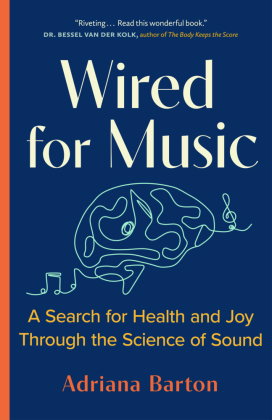
"Beautifully written... a riveting account of how melodies and rhythms connect us, and help us deal with alienation and anxiety."-Dr. Bessel van der Kolk, author of The Body Keeps the Score
In this captivating blend of science and memoir, a health journalist and former cellist explores music as a source of health, resilience, connection, and joy.
Music isn't just background noise or a series of torturous exercises we remember from piano lessons. In the right doses, it can double as a mild antidepressant, painkiller, sleeping pill, memory aid-and enhance athletic performance while supporting healthy aging. Though music has been used as a healing strategy since ancient times, neuroscientists have only recently discovered how melody and rhythm stimulate core memory, motor, and emotion centers in the brain. But here's the catch: We can tune into music every day and still miss out on some of its potent effects.
Adriana Barton learned the hard way. Starting at age five, she studied the cello for nearly two decades, a pursuit that left her with physical injuries and emotional scars. In Wired for Music, she sets out to discover what music is really for, combing through medical studies, discoveries by pioneering neuroscientists, and research from biology and anthropology. Traveling from state-of-the-art science labs to a remote village in Zimbabwe, her investigation gets to the heart of music's profound effects on the human body and brain. Blending science and story, Wired for Music shows how our species' age-old connection to melody and rhythm is wired inside us.