






Diese Website verwendet Cookies und ähnliche Technologien. Dabei handelt es sich um kleine Textdateien, die auf eurem Computer gespeichert und ausgelesen werden. Indem ihr auf "Alles akzeptieren" klickt, stimmt ihr der Verarbeitung von Daten, der Erstellung und Verarbeitung von individuellen Nutzungsprofilen über Websites und über Partner und Geräte hinweg sowie der Übermittlung eurer Daten an Drittanbieter zu, die eure Daten teilweise in Ländern außerhalb der Europäischen Union verarbeiten (GDPR Art. 49). Einzelheiten hierzu findet ihr in den Datenschutzhinweisen. Die Daten werden für Analysen und für eigene Zwecke Dritter verwendet. Weitere Informationen, auch über die Datenverarbeitung durch Drittanbieter und die Möglichkeit des Widerrufs, findet ihr in den Einstellungen und in unseren Datenschutzhinweisen. Hier könnt ihr mit den notwendigen Tools fortfahren.
- Verlag: Springer, Berlin
- Autor: Vladica Simic
- Artikel-Nr.: KNV96509194
- ISBN: 9783031369254
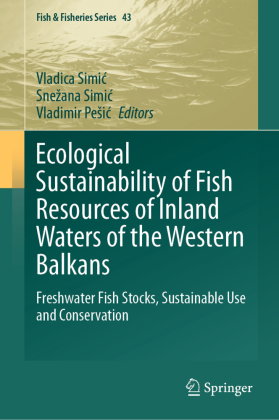
This book provides a detailed evaluation of the hydro-ecological characteristics of the Western Balkans, an area characterized by still preserved inland waters and fish resources important for the European continent, as well as the biodiversity of inland waters important for the planet Earth. Freshwater ecosystems cover only 1% of the Earth's surface; however, they are a habitat for about 40% of fish species. At the same time, inland fisheries make less than 12% of the world's global fish catch, with 43% coming from low-income and food-deficient countries (Africa, South America, Southeast Asia).
In Europe, the Western Balkans have significant fishing waters and fish resources, including the Middle Danube drainage (Sava, Drina, Velika Morava river systems), large ancient lakes (Skadar/Shkodra, Ohrid, Prespa, Dojran), and the Adriatic basin characterized by endemic and commercially important species. However, in contrast to the high fishing potential in a significant part of the Western Balkans, diverse and specific political, economic, and social factors largely had a negative impact on the state of fish resources.
This volume is multidisciplinary and provides a sound knowledge base for scientific and practical fisheries. In addition, it may be a valuable guide for managers and conservationists worldwide to adapt methods and procedures for the ecological sustainability of fish resources under specific local, natural, and socio-economic conditions. Finally, the content is a good reference for natural sciences and agriculture students studying fish, fish resources, and fisheries sciences. It would improve their knowledge and perspectives on the challenges of sustainable use and conservation of inland water resources.