






Diese Website verwendet Cookies und ähnliche Technologien. Dabei handelt es sich um kleine Textdateien, die auf eurem Computer gespeichert und ausgelesen werden. Indem ihr auf "Alles akzeptieren" klickt, stimmt ihr der Verarbeitung von Daten, der Erstellung und Verarbeitung von individuellen Nutzungsprofilen über Websites und über Partner und Geräte hinweg sowie der Übermittlung eurer Daten an Drittanbieter zu, die eure Daten teilweise in Ländern außerhalb der Europäischen Union verarbeiten (GDPR Art. 49). Einzelheiten hierzu findet ihr in den Datenschutzhinweisen. Die Daten werden für Analysen und für eigene Zwecke Dritter verwendet. Weitere Informationen, auch über die Datenverarbeitung durch Drittanbieter und die Möglichkeit des Widerrufs, findet ihr in den Einstellungen und in unseren Datenschutzhinweisen. Hier könnt ihr mit den notwendigen Tools fortfahren.
- Verlag: Springer, Berlin
- Autor: Harry J. Witchel
- Artikel-Nr.: KNV96509260
- ISBN: 9783030956356
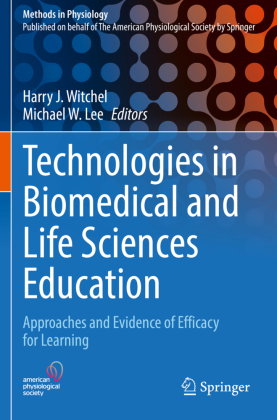
This contributed volume focuses on understanding the educational strengths and weaknesses of mediated content (including media as a learning supplement), in comparison to traditional face-to-face learning. Each chapter includes research on, and a broad-brush summary of, approaches to combining life sciences education with educational technologies.
The chapters are organized into four main sections, each of which focuses on a key question regarding the consequences of incorporating media into education. In this regard, the authors highlight how educational technology is both a bridge and barrier to student access and inclusivity. Further, they address the ongoing discussion as to whether students need to be present for lectures, and on how having agency in their own learning can improve both retention and conceptual understanding. To link the content to current events, the authors also shed light on the impact that the COVID-19 pandemic is having onthe continuity of educational programs and on the growing importance of educational technologies.
Consequently, the book offers life science educators valuable guidance on the technologies already available, and an outlook on what is yet to come.