






Diese Website verwendet Cookies und ähnliche Technologien. Dabei handelt es sich um kleine Textdateien, die auf eurem Computer gespeichert und ausgelesen werden. Indem ihr auf "Alles akzeptieren" klickt, stimmt ihr der Verarbeitung von Daten, der Erstellung und Verarbeitung von individuellen Nutzungsprofilen über Websites und über Partner und Geräte hinweg sowie der Übermittlung eurer Daten an Drittanbieter zu, die eure Daten teilweise in Ländern außerhalb der Europäischen Union verarbeiten (GDPR Art. 49). Einzelheiten hierzu findet ihr in den Datenschutzhinweisen. Die Daten werden für Analysen und für eigene Zwecke Dritter verwendet. Weitere Informationen, auch über die Datenverarbeitung durch Drittanbieter und die Möglichkeit des Widerrufs, findet ihr in den Einstellungen und in unseren Datenschutzhinweisen. Hier könnt ihr mit den notwendigen Tools fortfahren.
- Verlag: De Gruyter
- Autor: Kristen Renwick Monroe
- Artikel-Nr.: KNV96509601
- ISBN: 9783111142159
We live in an era of extreme claims versus weak consensus on issues critical to the public. Is climate change a hoax, or is it destroying our planet? Were the vaccines and social distancing measures of COVID-19 designed to protect us, or were they an invasion of our liberty? How do we determine the validity of these claims and others like them? Can we find a reliable middle ground leading to policies that help everyone?
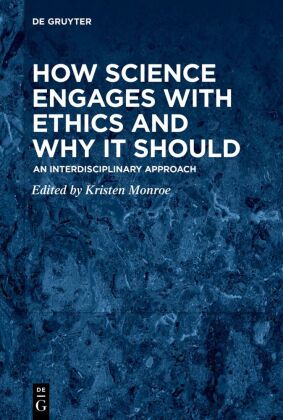
How Science Engages with Ethics and Why It Should makes an impassioned plea for a scientific analysis of ethics, discussing what such a method is, why we need it, and what it can offer that other methods cannot.
With contributions from leading thinkers across a range of disciplines, Part 1 explores the challenges facing scientists and how to establish ground rules that will both protect human subjects and guide researchers in the future. Part 2 explores the importance of evidence-based science for topics such as climate change, social care, political polarization and rational decision-making, showing how even good science can go wrong, at times contributing to disastrous effects.
At the cutting edge of its discipline, How Science Engages with Ethics and Why It Should provides a compelling case for demanding evidence-based analysis to form the foundation of the discussions and policies that affect our very lives.
With contributions by:Jeffrey Barratt, Peter Ditto, Jessica Maria Gonzalez, James W. Hicks, Mahtab Jafari, Rose McDermott, B.W. Sarnecka, Roxane Cohen Silver, Brian Skyrms, Teresa Sabol Spezio, Lawrence Sporty, Kyle Stanford, Ashley J. Thomas, James Tran, and the assistance of Ali Ansari, Kendrick Choi, Hannah Dastgheib, David Han, Nate Kang, Alexis Kim, Connor Lee, Michelle Lee, Lauren O'Neill, Samuel Shih, and Anqi Wang.