






Diese Website verwendet Cookies und ähnliche Technologien. Dabei handelt es sich um kleine Textdateien, die auf eurem Computer gespeichert und ausgelesen werden. Indem ihr auf "Alles akzeptieren" klickt, stimmt ihr der Verarbeitung von Daten, der Erstellung und Verarbeitung von individuellen Nutzungsprofilen über Websites und über Partner und Geräte hinweg sowie der Übermittlung eurer Daten an Drittanbieter zu, die eure Daten teilweise in Ländern außerhalb der Europäischen Union verarbeiten (GDPR Art. 49). Einzelheiten hierzu findet ihr in den Datenschutzhinweisen. Die Daten werden für Analysen und für eigene Zwecke Dritter verwendet. Weitere Informationen, auch über die Datenverarbeitung durch Drittanbieter und die Möglichkeit des Widerrufs, findet ihr in den Einstellungen und in unseren Datenschutzhinweisen. Hier könnt ihr mit den notwendigen Tools fortfahren.
- Verlag: Wiley & Sons
- Autor: Pierre Bourdieu
- Artikel-Nr.: KNV96705098
- ISBN: 9781509526727
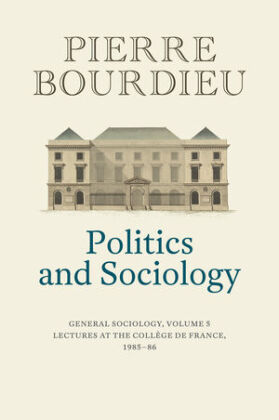
In this volume, Bourdieu develops his view of the social world as the site of a struggle for the legitimate vision of the world. The specific weapon used in these struggles is what Bourdieu calls symbolic capital, which is economic, cultural or social capital when perceived through suitable categories of perception. All forms of power seek to impose their own categories of perception in a way that is both recognised and misrecognised. This is how forms of power establish themselves as legitimate, because legitimacy is a force of recognition based on misrecognition, that is, recognised in a way that prevents us from recognising its arbitrariness.
By rejecting the opposition between structuralist objectification and subjectivist constructivism, sociology can seek to grasp both the objective structure of social fields and the properly political strategies that agents use in order to establish and impose their viewpoint. And it can do so without forgetting that the whole world of social construction is oriented by the perception agents have of the social world, which depends on their position in the structures of social fields and their dispositions, themselves fashioned by these structures.
An ideal introduction to some of Bourdieu's most important ideas, the five volumes of this series will be of great value to students and scholars who study and use Bourdieu's work across the social sciences and humanities, and they will be of interest to general readers who want to know more about the work of one of the most important sociologists and social thinkers of the twentieth century.