






Diese Website verwendet Cookies und ähnliche Technologien. Dabei handelt es sich um kleine Textdateien, die auf eurem Computer gespeichert und ausgelesen werden. Indem ihr auf "Alles akzeptieren" klickt, stimmt ihr der Verarbeitung von Daten, der Erstellung und Verarbeitung von individuellen Nutzungsprofilen über Websites und über Partner und Geräte hinweg sowie der Übermittlung eurer Daten an Drittanbieter zu, die eure Daten teilweise in Ländern außerhalb der Europäischen Union verarbeiten (GDPR Art. 49). Einzelheiten hierzu findet ihr in den Datenschutzhinweisen. Die Daten werden für Analysen und für eigene Zwecke Dritter verwendet. Weitere Informationen, auch über die Datenverarbeitung durch Drittanbieter und die Möglichkeit des Widerrufs, findet ihr in den Einstellungen und in unseren Datenschutzhinweisen. Hier könnt ihr mit den notwendigen Tools fortfahren.
- Verlag: Springer, Berlin
- Autor: Estevão Rafael Fernandes
- Artikel-Nr.: KNV96706932
- ISBN: 9783031406652
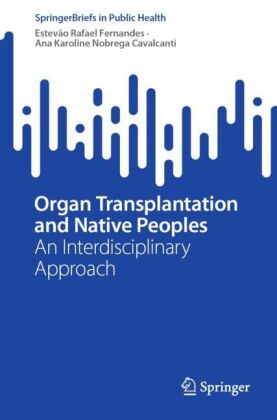
This book presents important concepts from medical and socio-cultural anthropology to health professionals working with organ transplantation involving indigenous populations. Written by an anthropologist and a nephrologist working at the Brazilian Amazon region, it presents an interdisciplinary approach merging perspectives from medical and socio-cultural anthropology, social epidemiology and clinical medicine to blend philosophical concerns around tissue and organ exchange with transplant-related initiatives in order to help health professionals develop care protocols that take into account the specific cultures of indigenous populations.
The approach proposed in this book is based on the assumption that there are other concepts of bodies, personhood, health, sickness, and collectivity implicated in processes of organ transplantation and health care in general that must be taken into consideration beyond strictly biomedical perspectives. Such cultural aspects also imply challenges in terms of bioethics and legislation, given the need to respect indigenous cultures. So, in order to offer health professionals practical insights, the book presents a review of the literature available about experiences of organ transplantation in ethnically diverse countries and how the professionals involved have addressed this diversity respecting these groups from a cultural, ethical, and epidemiological point of view.
Organ Transplantation and Native Peoples: An Interdisciplinary Approach is primarily aimed at being a practical tool for health professionals working with indigenous populations, but will also be of interest to researchers in different fields of the social and health sciences, such as medical anthropology, public health, nursing, bioethics and epidemiology.