






Diese Website verwendet Cookies und ähnliche Technologien. Dabei handelt es sich um kleine Textdateien, die auf eurem Computer gespeichert und ausgelesen werden. Indem ihr auf "Alles akzeptieren" klickt, stimmt ihr der Verarbeitung von Daten, der Erstellung und Verarbeitung von individuellen Nutzungsprofilen über Websites und über Partner und Geräte hinweg sowie der Übermittlung eurer Daten an Drittanbieter zu, die eure Daten teilweise in Ländern außerhalb der Europäischen Union verarbeiten (GDPR Art. 49). Einzelheiten hierzu findet ihr in den Datenschutzhinweisen. Die Daten werden für Analysen und für eigene Zwecke Dritter verwendet. Weitere Informationen, auch über die Datenverarbeitung durch Drittanbieter und die Möglichkeit des Widerrufs, findet ihr in den Einstellungen und in unseren Datenschutzhinweisen. Hier könnt ihr mit den notwendigen Tools fortfahren.
- Verlag: Michael O'Mara Publications
- Autor: Chloe Rhodes
- Artikel-Nr.: KNV96476342
- ISBN: 9781789295955
Why are geese in a gaggle? Are lions actually proud? And do crows deserve their murderous moniker?
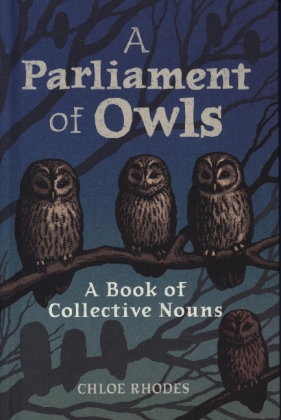
Collective nouns are one of the most bizarre and baffling aspects of the English language, and this absorbing book tells the stories of these evocative phrases, exploring and explaining the etymology behind them.
Each collective noun summons up the animal or event it describes. But where did they come from? 'A parliament of owls', for example, seems to have its origins in the 1950s children's classic The Chronicles of Narnia in which C.S. Lewis references a phrase from Chaucer, 'the parliament of fowls'. Lewis' version changed 'fowls' to 'owls' and due to the international success of his books it caught on and is now recognised as dictionary compilers as the 'correct' term for a group of owls.
Perfect for any history or language buff, this is an entertaining and fascinating look at many of the bizarre phrases which have stood the test of time.