






Diese Website verwendet Cookies und ähnliche Technologien. Dabei handelt es sich um kleine Textdateien, die auf eurem Computer gespeichert und ausgelesen werden. Indem ihr auf "Alles akzeptieren" klickt, stimmt ihr der Verarbeitung von Daten, der Erstellung und Verarbeitung von individuellen Nutzungsprofilen über Websites und über Partner und Geräte hinweg sowie der Übermittlung eurer Daten an Drittanbieter zu, die eure Daten teilweise in Ländern außerhalb der Europäischen Union verarbeiten (GDPR Art. 49). Einzelheiten hierzu findet ihr in den Datenschutzhinweisen. Die Daten werden für Analysen und für eigene Zwecke Dritter verwendet. Weitere Informationen, auch über die Datenverarbeitung durch Drittanbieter und die Möglichkeit des Widerrufs, findet ihr in den Einstellungen und in unseren Datenschutzhinweisen. Hier könnt ihr mit den notwendigen Tools fortfahren.
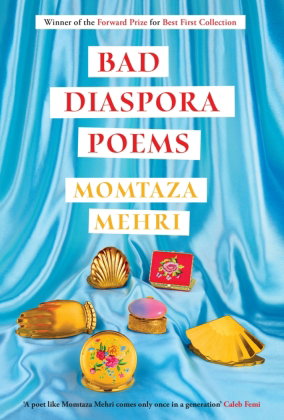
- Verlag: Random House UK
- Autor: Momtaza Mehri
- Artikel-Nr.: KNV96708697
- ISBN: 9781787334373
Diaspora is witnessing a murder without getting blood on your shirt.
***WINNER OF THE FORWARD PRIZE FOR BEST FIRST COLLECTION***
***FINALIST FOR THE SUNDAY TIMES YOUNG WRITER OF THE YEAR AWARD***
***WINNER OF THE SKY ARTS AWARD FOR POETRY***
'Exceptional... Mehri is a truly transnational poet of the twenty-first century'
BERNARDINE EVARISTO, author of Girl, Woman, Other
'A once in a generation poet'
CALEB FEMI, author of Poor
The definition of diaspora is the dispersion of people from their original homeland. But what does it mean to write diaspora poetry? Momtaza Mehri's debut collection poses this question, taking us from Mogadishu to Naples, Lampedusa to London. Mixing her own family's experience with the stories of many others across nineteenth- and twentieth-century Somalia, Bad Diaspora Poems confronts the ambivalent nature of speaking for those who have been left behind.
We meet the poet, the translator, the refugee, the exile, and the diaspora kid attempting to transcend their clichéd angst. Told in lyric, prose and text messages, and taking place in living rooms and marketplaces, on buses and balconies, on transatlantic journeys and online, these are essential poems about our diasporic age.