






Diese Website verwendet Cookies und ähnliche Technologien. Dabei handelt es sich um kleine Textdateien, die auf eurem Computer gespeichert und ausgelesen werden. Indem ihr auf "Alles akzeptieren" klickt, stimmt ihr der Verarbeitung von Daten, der Erstellung und Verarbeitung von individuellen Nutzungsprofilen über Websites und über Partner und Geräte hinweg sowie der Übermittlung eurer Daten an Drittanbieter zu, die eure Daten teilweise in Ländern außerhalb der Europäischen Union verarbeiten (GDPR Art. 49). Einzelheiten hierzu findet ihr in den Datenschutzhinweisen. Die Daten werden für Analysen und für eigene Zwecke Dritter verwendet. Weitere Informationen, auch über die Datenverarbeitung durch Drittanbieter und die Möglichkeit des Widerrufs, findet ihr in den Einstellungen und in unseren Datenschutzhinweisen. Hier könnt ihr mit den notwendigen Tools fortfahren.
- Verlag: Springer, Berlin
- Autor: Alka Kumar
- Artikel-Nr.: KNV96714558
- ISBN: 9783031413476
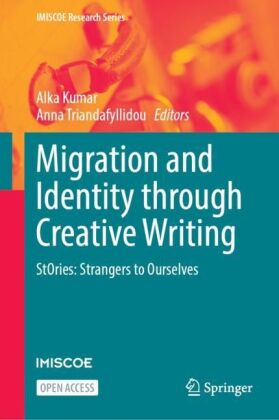
This open access book brings together storytelling and self-narrative, creative writing and narrative enquiry to explore a variety of topics in migration from an experiential lens. The volume is hybrid and multi-genre as it contains both scholarly chapters grounded in academic perspectives, as well as personal essays and creative non-fiction. In addition to critical reflections on key migration topics and concepts - like, identity and diversity, integration and agency, transnationalism and return - the scholarly chapters also propose a particular methodology for 'workshopping' migration narratives, and writing about (personal) lived experiences through iterations of scientific reflection, narrative enquiry, and creative imagination. The book explores the potential of a new conceptual paradigm and methodological process to learn more, and also `differently,' about the migration experience. Finally, this volume asks a bigger question too - how do we define the boundaries of research;is it possible to entirely separate the spatial, temporal and methodological parameters in which projects are developed and pursued; and how can the specifics of these multiple contexts contribute to shaping the knowledge being produced?