






Diese Website verwendet Cookies und ähnliche Technologien. Dabei handelt es sich um kleine Textdateien, die auf eurem Computer gespeichert und ausgelesen werden. Indem ihr auf "Alles akzeptieren" klickt, stimmt ihr der Verarbeitung von Daten, der Erstellung und Verarbeitung von individuellen Nutzungsprofilen über Websites und über Partner und Geräte hinweg sowie der Übermittlung eurer Daten an Drittanbieter zu, die eure Daten teilweise in Ländern außerhalb der Europäischen Union verarbeiten (GDPR Art. 49). Einzelheiten hierzu findet ihr in den Datenschutzhinweisen. Die Daten werden für Analysen und für eigene Zwecke Dritter verwendet. Weitere Informationen, auch über die Datenverarbeitung durch Drittanbieter und die Möglichkeit des Widerrufs, findet ihr in den Einstellungen und in unseren Datenschutzhinweisen. Hier könnt ihr mit den notwendigen Tools fortfahren.
- Verlag: Springer, Berlin
- Autor: Grace Ngai
- Artikel-Nr.: KNV96736999
- ISBN: 9789811924392
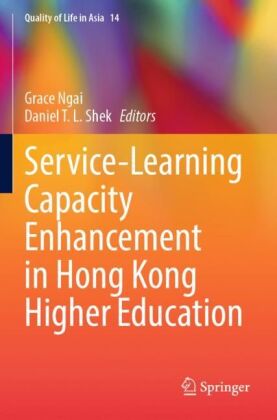
This book provides an in-depth, multi-faceted look into capacity building for service-learning, using the case of the higher education landscape in Hong Kong. Service-learning has been proven to be an effective pedagogy for the holistic development of students, as well as promotion of their well-being. It also attempts to promote the well-being of the service recipients and the community. While service-learning is becoming increasingly popular in many higher educational institutions around the world, the learning gains that can be attained from service-learning are only as good as the learning experience allows, and poorly-developed or motivated service-learning may potentially do adverse harm to students and the community. This book reinforces the imperative to enhance the capacity of the institution, teachers, students and community partners by exploring a diverse range of methods for achieving capacity building among different stakeholders. Examples of the methods explored include formal course-based professional development, scale development, action research, and communities of practice. Furthermore, the book includes a series of detailed, qualitative case studies that are aimed at embodying good practice, unpacking "what matters" from service-learning. Aa a useful resource for scholars and educators who are passionate about holistic youth leadership development, this book is also relevant to researchers in the intersection between well-being and higher education.