


Diese Website verwendet Cookies und ähnliche Technologien. Dabei handelt es sich um kleine Textdateien, die auf eurem Computer gespeichert und ausgelesen werden. Indem ihr auf "Alles akzeptieren" klickt, stimmt ihr der Verarbeitung von Daten, der Erstellung und Verarbeitung von individuellen Nutzungsprofilen über Websites und über Partner und Geräte hinweg sowie der Übermittlung eurer Daten an Drittanbieter zu, die eure Daten teilweise in Ländern außerhalb der Europäischen Union verarbeiten (GDPR Art. 49). Einzelheiten hierzu findet ihr in den Datenschutzhinweisen. Die Daten werden für Analysen und für eigene Zwecke Dritter verwendet. Weitere Informationen, auch über die Datenverarbeitung durch Drittanbieter und die Möglichkeit des Widerrufs, findet ihr in den Einstellungen und in unseren Datenschutzhinweisen. Hier könnt ihr mit den notwendigen Tools fortfahren.
- Verlag: Springer, Berlin
- Autor: Hon-Lam Li
- Artikel-Nr.: KNV96736832
- ISBN: 9783031420511
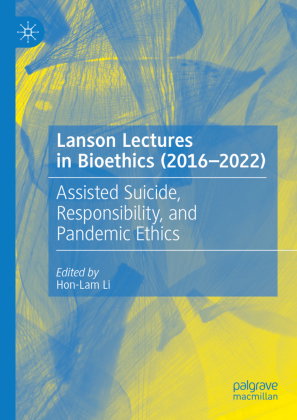
Bioethical issues are practically urgent, politically divisive, and call for resolutions. They often involve questions that are perplexing, deep, and profound. To deal with them adequately requires philosophical tools and imagination. The Lanson Lectures in Bioethics were founded upon the belief that philosophical elucidation can clarify the nature of these difficult issues, and can lead to their resolution.
The present volume collects the first five lectures delivered by five preeminent moral philosophers between 2016 and 2022. In the inaugural lecture, Jonathan Glover draws a distinction between two conceptions of dignity, and brings it to bear on the issues of assisted suicide, embryo research, and genetic choices.
F. M. Kamm argues that doctors are morally permitted to intentionally cause death, or assist in its being intentionally caused, when either death is imminent anyway and intentionally causing it can alone stop the pain, or ifthe patient has already decided-not unreasonably-that death is his least bad option.
Rejecting Strawson's view that a psychiatrist can only "treat" an insane patient, Victor Tadros argues that it is often right to reason with (nonresponsible) mentally ill persons because a psychiatrist needs to see things from their perspectives, and that we should communicate to nonresponsible agents that their wrongdoing is a problem for them and for their victims.
Peter Singer proposes solutions to the following questions: How to distribute scarce medical resources and vaccines ethically? Whether to relax the standard for volunteers willing to participate in vaccines research? How to compare the trade-off between saving lives and saving the economy regarding lockdowns? How to prevent pandemics in future?
Each lecture is followed by a critical commentary by a moral philosophers or physician in Asia. Each commentary (except the inaugural lecture) is followed by a rejoinder.