






Diese Website verwendet Cookies und ähnliche Technologien. Dabei handelt es sich um kleine Textdateien, die auf eurem Computer gespeichert und ausgelesen werden. Indem ihr auf "Alles akzeptieren" klickt, stimmt ihr der Verarbeitung von Daten, der Erstellung und Verarbeitung von individuellen Nutzungsprofilen über Websites und über Partner und Geräte hinweg sowie der Übermittlung eurer Daten an Drittanbieter zu, die eure Daten teilweise in Ländern außerhalb der Europäischen Union verarbeiten (GDPR Art. 49). Einzelheiten hierzu findet ihr in den Datenschutzhinweisen. Die Daten werden für Analysen und für eigene Zwecke Dritter verwendet. Weitere Informationen, auch über die Datenverarbeitung durch Drittanbieter und die Möglichkeit des Widerrufs, findet ihr in den Einstellungen und in unseren Datenschutzhinweisen. Hier könnt ihr mit den notwendigen Tools fortfahren.
- Verlag: Springer, Berlin
- Autor: Laura Montedoro
- Artikel-Nr.: KNV96765559
- ISBN: 9783030965402
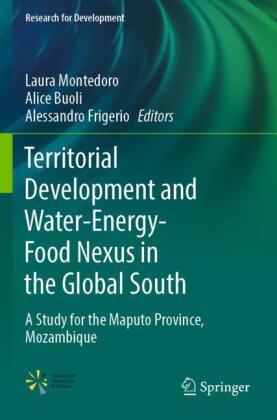
This volume collects the results from the Politecnico di Milan's award-winning "Boa_Ma_Nhã, Maputo!" research-by-design project, which studied various transdisciplinary approaches to development in the context of the Global South. The challenges of urbanization are well known, but that only goes so far in aiding implementation. From local considerations like water access and housing rights to global issues like climate change, territorial development demands solutions that address the needs of the specific population while keeping such goals as sustainability and inclusion in mind. By focusing on a number of towns within the Maputo Province of Mozambique, and thus addressing many of the issues endemic to Sub-Saharan Africa, the research, structurally presented so as to aid those who may require introduction to the issue, makes a clear case in favor of always keeping the Water-Energy-Food (WEF) Nexus in mind when formulating development strategies for improving people's lives, as well as the wisdom of marrying academic findings with the insights accrued by local NGOs and institutions, thereby expanding the potential idea bank beyond the Eurocentric status quo that has tended to dominate the field.