






Diese Website verwendet Cookies und ähnliche Technologien. Dabei handelt es sich um kleine Textdateien, die auf eurem Computer gespeichert und ausgelesen werden. Indem ihr auf "Alles akzeptieren" klickt, stimmt ihr der Verarbeitung von Daten, der Erstellung und Verarbeitung von individuellen Nutzungsprofilen über Websites und über Partner und Geräte hinweg sowie der Übermittlung eurer Daten an Drittanbieter zu, die eure Daten teilweise in Ländern außerhalb der Europäischen Union verarbeiten (GDPR Art. 49). Einzelheiten hierzu findet ihr in den Datenschutzhinweisen. Die Daten werden für Analysen und für eigene Zwecke Dritter verwendet. Weitere Informationen, auch über die Datenverarbeitung durch Drittanbieter und die Möglichkeit des Widerrufs, findet ihr in den Einstellungen und in unseren Datenschutzhinweisen. Hier könnt ihr mit den notwendigen Tools fortfahren.
- Verlag: Springer, Berlin
- Autor: Faris Kocan
- Artikel-Nr.: KNV96939607
- ISBN: 9783031461682
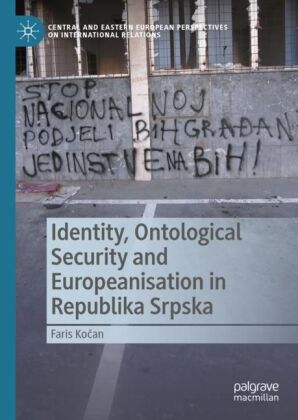
This book discusses the impact of the process of accession to the European Union (EU) - i.e. Europeanisation - on the formulation of the ethnic identity of Bosnian Serbs and the political identity of Republika Srpska (RS) in Bosnia and Herzegovina (BiH). The centrepiece of the book is an examination of how it is possible that the expected effect of Europeanisation on ethnic identities in a post-conflict environment - a transformation of ethnic identities through desecuritisation - does not materialise in the case of BiH and the RS. The book starts from the assumption that the political elite in the RS uses Europeanisation as a context for the securitization of two sources of threats - the internal and external Other. This prevents the transformation of ethnic identities in BiH, and as a result also the desecuritisation of antagonisms among the ethnic groups of BiH. The results show that any attempt at a more active engagement by the EU and international community was interpreted by the RS political elite as Bosniak agenda aimed against the RS. In this respect, the book demonstrates that BiH's EU accession process or a clearer EU perspective alone in scrutinized critical junctures did not outweigh the potential costs for the RS political elite if reforms aimed at creating a more functional BiH were to succeed. In all three analysed critical junctures, the political elite in RS presented motions for a more functional BiH as attempts to centralise the country and framed them as the beginning of the end for the RS as a political entity.