






Diese Website verwendet Cookies und ähnliche Technologien. Dabei handelt es sich um kleine Textdateien, die auf eurem Computer gespeichert und ausgelesen werden. Indem ihr auf "Alles akzeptieren" klickt, stimmt ihr der Verarbeitung von Daten, der Erstellung und Verarbeitung von individuellen Nutzungsprofilen über Websites und über Partner und Geräte hinweg sowie der Übermittlung eurer Daten an Drittanbieter zu, die eure Daten teilweise in Ländern außerhalb der Europäischen Union verarbeiten (GDPR Art. 49). Einzelheiten hierzu findet ihr in den Datenschutzhinweisen. Die Daten werden für Analysen und für eigene Zwecke Dritter verwendet. Weitere Informationen, auch über die Datenverarbeitung durch Drittanbieter und die Möglichkeit des Widerrufs, findet ihr in den Einstellungen und in unseren Datenschutzhinweisen. Hier könnt ihr mit den notwendigen Tools fortfahren.
- Verlag: Reichert
- Autor: Barbara Scholkmann
- Artikel-Nr.: KNV96702451
- ISBN: 9783752007299
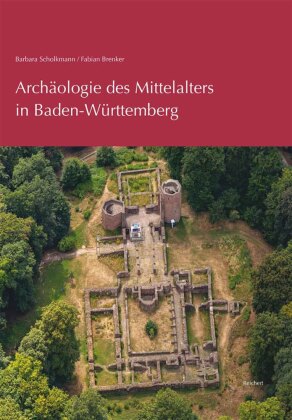
In this book, for the first time, Barbara Scholkmann and Fabian Brenker present a summary of many of the new insights into the world of the Middle Ages gained through these excavations. They include rural settlements - with house, farm, field and pasture - as well as the palaces and royal courts as places of residence of the rulers, such as Rottweil. An extensive chapter is devoted to urban archaeology, with results, among others, for Ulm (the only major medieval city in the South West), for Freiburg (founded by the Zähringers), for the episcopal city of Constance and, last but not least, for the state capital of Stuttgart. Archaeological research on castles yielded interesting results into the development of aristocratic representation and exercise of power. The overview of religious archaeology includes churches, monasteries and convents; cemeteries and church burials were investigated as part of an archaeology of death. In addition, archaeologically researched evidence of medieval Jewish life is assembled. Extensive new discoveries are set out for craft and commercial production. In addition, there are findings on trade and traffic, by water and by land. Finally, the spectrum of new knowledge on material culture, the multitude of everyday objects, their practical use and their social significance is particularly diverse. The book is prefaced with a comprehensive overview of the history of research into medieval archaeology in Baden-Württemberg, and concludes with an evaluative commentary on the findings available at present.
All in all, this work presents a comprehensive overview of archaeological research into the Middle Ages in Baden-Württemberg conducted thus far, not only providing parallel medieval disciplines with very well-prepared information on the current state of research, but also offering an important basis for future research approaches, priorities and evaluations for archaeologists themselves.