






Diese Website verwendet Cookies und ähnliche Technologien. Dabei handelt es sich um kleine Textdateien, die auf eurem Computer gespeichert und ausgelesen werden. Indem ihr auf "Alles akzeptieren" klickt, stimmt ihr der Verarbeitung von Daten, der Erstellung und Verarbeitung von individuellen Nutzungsprofilen über Websites und über Partner und Geräte hinweg sowie der Übermittlung eurer Daten an Drittanbieter zu, die eure Daten teilweise in Ländern außerhalb der Europäischen Union verarbeiten (GDPR Art. 49). Einzelheiten hierzu findet ihr in den Datenschutzhinweisen. Die Daten werden für Analysen und für eigene Zwecke Dritter verwendet. Weitere Informationen, auch über die Datenverarbeitung durch Drittanbieter und die Möglichkeit des Widerrufs, findet ihr in den Einstellungen und in unseren Datenschutzhinweisen. Hier könnt ihr mit den notwendigen Tools fortfahren.
- Verlag: Springer, Berlin
- Autor: Torbjörn Arenbo
- Artikel-Nr.: KNV96946581
- ISBN: 9783031470479
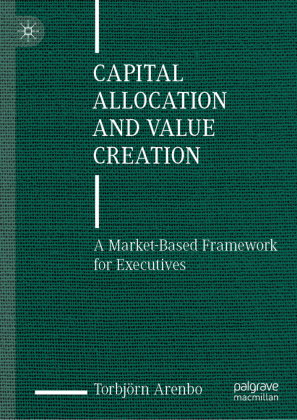
By adopting a practical, market-oriented approach to capital allocation, this book sheds light on the complex issue of cash flow deployment and the creation of shareholder value. In order to run a company efficiently, it is not sufficient to simply be a competent businessperson. One must also possess the skills of a knowledgeable investor. The management must determine where to invest capital given the diverse range of investment options available, such as mergers and acquisitions (M&A), dividends, share repurchase programs, and organic growth opportunities.
This book provides a useful analytical framework for corporate executives to consider when allocating capital, along with empirical findings from peer group studies and company case studies.
The book helps answer the following questions:
· What are the primary factors that drive your company's shareholder value? Are they aligned with the strategy the companyis pursuing?
· What are the key dynamics and trade-offs between return on investments (ROIC), growth, and earnings quality?
· What are the current market expectations embedded in the stock price?
· Given the capital allocation priorities, what does an "optimal" capital structure look like?
· How do you set, and in turn communicate, the capital allocation and funding priorities?
Written by an expert with more than 25 years of experience, this book helps business executives improve their skills as capital allocators by better understanding the financial markets.